
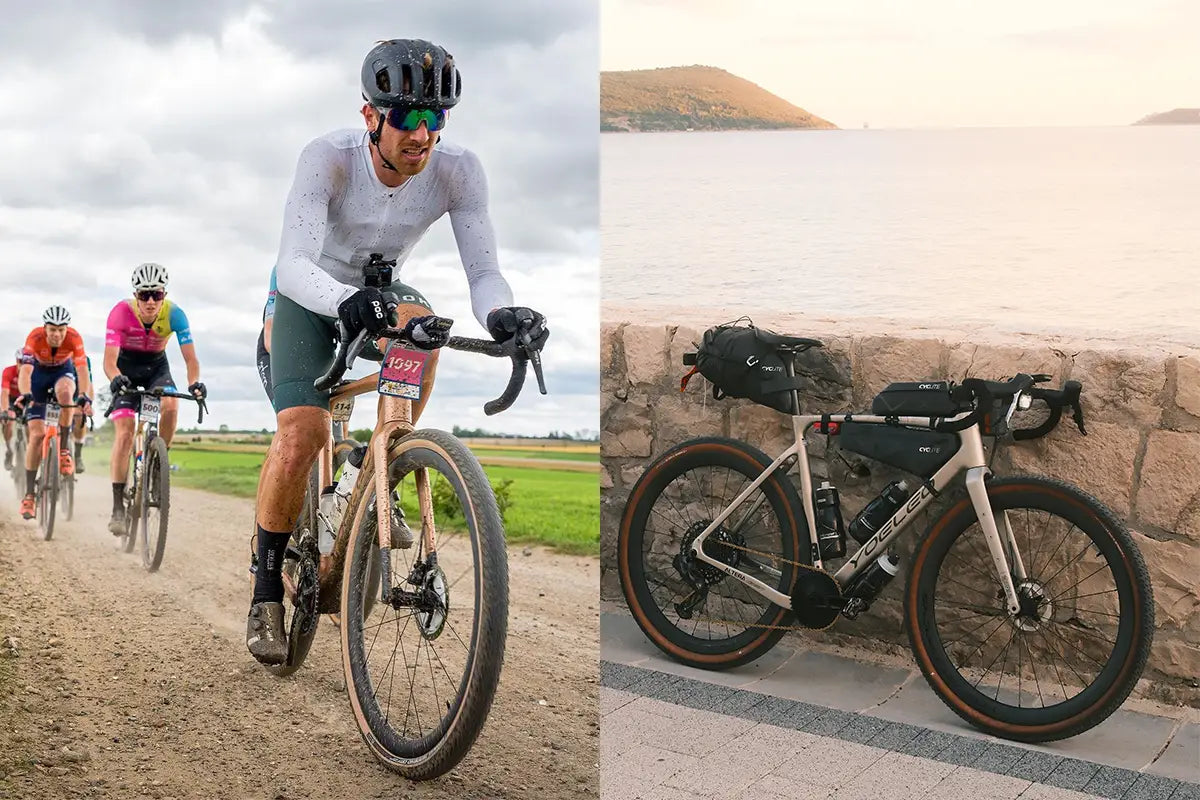
The same frame can win UCI Gravel Worlds on a Saturday and cross Europe with a loaded fork the following month. This is what "all-rounder" actually means when the frame is engineered for both. The Altera G21 was built to be one platform that handles both disciplines — not a compromise between them, but a genuine both-and solution. This post shows how.
|
ONE FRAME, TWO RIDERS
• Svetlana — UCI Gravel World Champion 2025, race build, 7.9kg all-in
• Lucas — Bikepacker, loaded cargo fork, 18kg all-in including gear
• Same Altera G21 frame, different fork and build choices
|
What does a race-build Altera G21 look like?
Svetlana’s UCI Gravel Worlds bike: seamless-aero fork (no cargo mounts, smoother airflow), 42mm tubeless tires on SAT C45 NxT Gravel wheels, 1x drivetrain with 42T front and 10-46 rear cassette, H21 integrated handlebar in 420mm with 15.2° flare, two bottle mounts used, top-tube storage used for race nutrition. Total weight with bottles: 7.9kg. Ready to race for six hours.
Every choice is a race choice. Low weight, tight aerodynamics, simple drivetrain, maximum tire width for the course, minimum cargo. The frame is the same Altera G21 you can order today. The race-build is a series of component selections, not a race-only frame.

What does a bikepacking-build Altera G21 look like?
Lucas’ trans-Europe bikepacking bike: pannier-mount fork (three-position cargo cages on each leg), 47mm tubeless tires on a wider rim, 2x drivetrain with 46/30 front and 11-36 rear for loaded climbing, flared drop bar with bar bag and feed bags, frame bag in the main triangle, seat bag for sleep system, cargo cages on the fork for water and stove, in-frame top-tube storage for phone and wallet, in-frame down-tube storage for tools and spare parts. Total loaded weight: 18kg.
Every choice is an adventure choice. Cargo capacity, redundant water storage, gearing for loaded climbs, tire width for comfort over days, frame geometry that stays stable under cargo. Same frame, different philosophy.

What does the frame have to do to support both?
A frame that genuinely serves both disciplines needs six things: fork cargo mounts that are optional (not every buyer wants them), scalable drivetrain compatibility (1x or 2x without modification), tire clearance generous enough for both race tires and adventure tires, in-frame storage that is useful for both short races and long adventures, a dropper-compatible seatpost, and geometry that stays stable under load without becoming sluggish when unloaded.
The Altera G21 has all six. The fork is chosen at order (pannier-mount or seamless-aero). The UDH hanger supports any modern 1x or 2x. 700×53mm clearance covers both race and adventure tire widths. In-frame storage is integrated, not bolt-on. The 27.2mm seatpost is dropper-compatible. Geometry is race-tested (Pravilova/Verkuijl) and cargo-tested (Lucas across Europe).

Do you have to commit to one or the other?
No. One frame, two sets of wheels, two sets of tires, swap-ready. A racer-turned-adventurer can run the same Altera G21 as both — one weekend racing, the next weekend loaded for three days of bikepacking. The specific changes that are easy to make in a few hours:
|
Change
|
Race Setup
|
Bikepacking Setup
|
|
Tires
|
42mm tubeless, 25–28 psi
|
47mm tubeless, 30–32 psi
|
|
Drivetrain
|
1x 42T / 10-46
|
1x 40T / 10-52 (or 2x)
|
|
Bags
|
Top-tube bag only
|
Frame bag + seat bag + bar bag + feed bags
|
|
Hydration
|
2 on-frame bottles
|
2 on-frame + 2 fork cages
|
|
Fork (fixed)
|
Seamless-aero
|
Pannier-mount
|
|
Seatpost
|
Standard 27.2
|
Dropper (optional)
|
Note that the fork decision is the one choice that is fixed at order time — you cannot switch fork types after purchase. A rider who plans to do both should order the pannier-mount fork, which still races well (the weight penalty is under 100g). The other direction (buying seamless and wishing it had mounts later) is not recoverable without a fork replacement.
Why one frame is better than two
Owning two specialized bikes — a pure race gravel bike and a pure touring bike — is a luxury most riders cannot justify in space, money, or maintenance time. A single frame that serves both disciplines is not a compromise if the frame is engineered for both from the start. The Altera G21 was designed this way. The engineering signals: T-47 bottom bracket (tougher than BB386 or BB90 under cargo loads), UDH hanger (future-proof), 27.2mm round seatpost (compliance + dropper compatibility), in-frame storage (bikepacking-origin feature applied to racing).
The rider who owns one Altera G21 and reconfigures it across disciplines has the same frame under them whether they are racing or bikepacking. Familiarity compounds — you know how the bike handles in every situation because you have ridden it in every situation. This is not just convenience. It is a genuine performance advantage over two separate bikes that each feel different.
FAQ
Can I really bikepack on the same frame that races UCI Worlds?
Yes, if the frame is engineered for both from the start. The Altera G21 has fork mounts (optional), in-frame storage, dropper-compatible seatpost, and 53mm tire clearance. Pravilova raced it at UCI Gravel Worlds; other riders have taken the same frame bikepacking across Europe.
Which fork should I order if I want to do both?
The pannier-mount fork. The aero penalty is under 100 grams and barely noticeable in racing. The cargo capability is essential for bikepacking and not recoverable after purchase without replacing the fork.
Does a bikepacking setup slow down a race bike?
Yes, in a racing context — cargo weight, aero drag from bags, wider tires. The point is that you do not race with the bikepacking setup. You strip the bike down to race configuration, race, and add the bags back. Same frame, different build for different days.
What is the weight difference between race and bikepacking builds?
Race build: 7.9kg unloaded. Bikepacking build: 10 to 11kg with cargo cages and bags empty, 15 to 20kg fully loaded. The frame’s 980g weight is a small fraction of either build total.
Will a bikepacking-configured frame handle like a race bike when unloaded?
Mostly yes. Empty cargo cages add small weight but do not meaningfully change handling. The seamless-aero fork has a very small handling advantage over the pannier-mount fork unloaded — for most riders this is below the noticeable threshold.
Share:
Altera G21 Geometry Deep-Dive
Bike Fit vs Weight: The Real Endurance Secret (2026)