
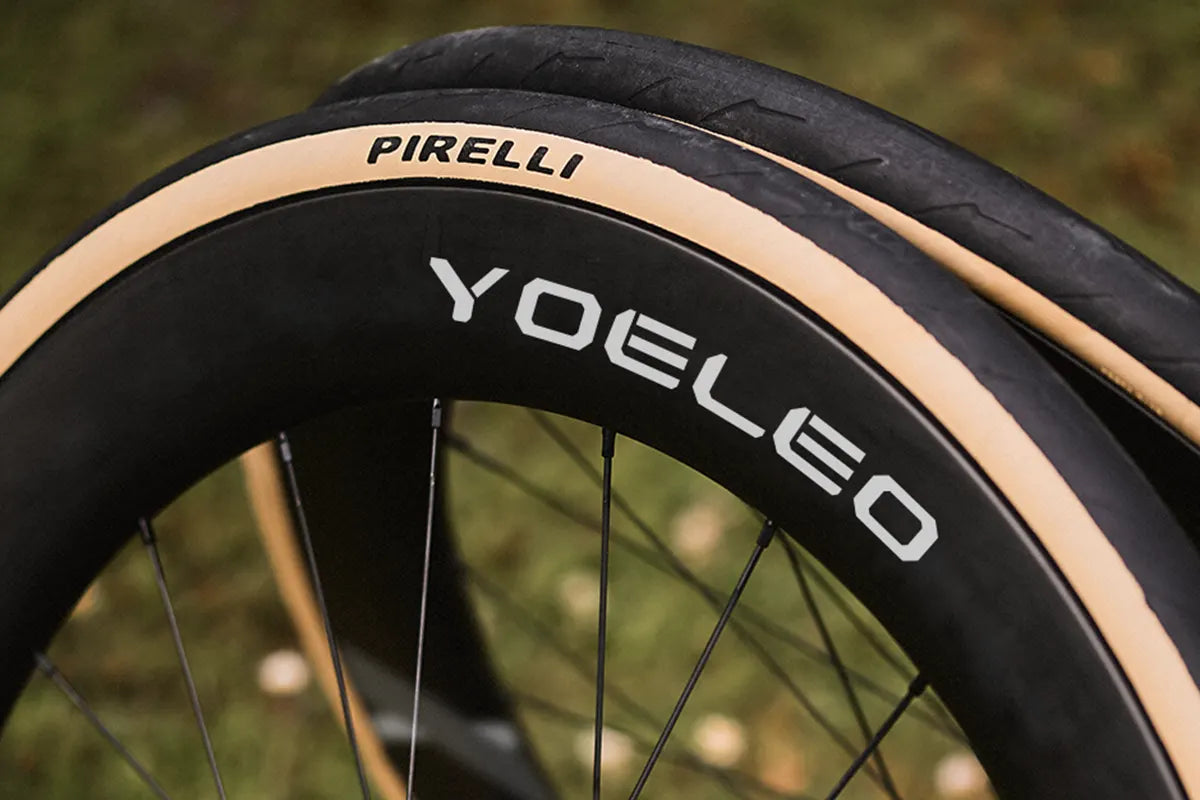
You have decided to upgrade from alloy to carbon wheels. You open a browser tab, type in your budget, and suddenly you are staring at a grid of rim depths: 35mm, 50mm, 60mm, 88mm. Each product page tells you that its depth is the best choice. None of them tell you why — or more importantly, why it might be the wrong choice for you.

That paralysis is normal. Rim depth is the most visible variable on a wheelset and one of the most misunderstood. This guide cuts through the noise with a calm, methodical framework so your first carbon upgrade is one you are still happy with three years later.
|
FIRST CARBON WHEELSET IN 30 SECONDS
• 35–40mm: lightest, most versatile, best in crosswinds — the right call for most first-time buyers
• 50mm: the sweet spot for all-round road riding, meaningful aero gain, manageable crosswind behaviour
• 60mm+: genuine flat-terrain aero, but less forgiving in wind and demands more rider confidence
• Tubeless compatibility and disc brake compatibility matter more than depth — confirm both before buying
|
What Rim Depth Actually Changes
Rim depth changes three things: aerodynamics, weight, and crosswind behaviour — and they all trade against each other. A deeper rim catches more air at speed (aerodynamic benefit) but also catches more side wind (crosswind penalty) and typically adds more rim mass (weight penalty). No depth wins on all three axes.
The critical number is your average speed. Aero gains from deeper rims become measurable above roughly 30–35 kph. Below that threshold, the weight of a deeper rim costs more time on climbs than the aero shape saves on the flat. Most riders are better served by a shallower rim than their instincts suggest.
Depth by Depth: What Each Choice Gives You
|
Rim Depth
|
Weight Profile
|
Aero Benefit
|
Crosswind Risk
|
Best For
|
|
35mm
|
Lightest
|
Low–Moderate
|
Very Low
|
Climbing, hilly routes, windy regions, versatile all-year use
|
|
40–45mm
|
Moderate
|
Moderate
|
Low
|
Gravel, mixed terrain, riders who want one set for everything
|
|
50mm
|
Moderate
|
Meaningful
|
Moderate
|
All-round road, most riders' sweet spot for first carbon upgrade
|
|
60mm
|
Slightly heavier
|
High
|
Moderate–High
|
Flat routes, rolling roads, riders confident in crosswinds
|
|
88mm+
|
Heaviest
|
Very High
|
High
|
Time trials, triathlons, flat specialist — not a first upgrade
|
Weight: How Much It Matters on Your Rides
Rotational weight — the mass at the rim — has a compound effect because it must be accelerated both linearly and rotationally. Independent testing summarized by BikeRadar and others consistently shows that saving 100g of rotational mass at the rim produces a more noticeable real-world feel than saving 100g from the frame. That matters when you are choosing between a 35mm and 60mm rim.
For most riders, a 35mm or 50mm carbon wheelset will feel dramatically livelier than alloy regardless of depth — the jump from alloy to carbon is larger than the jump between rim depths within the carbon category. Do not agonize over whether a rim is 380g or 430g; make sure you are going carbon at all.
Tubeless: Should Your First Carbon Wheelset Run It?
Tubeless-ready rims are worth having on any carbon upgrade — even if you run inner tubes at first. A tubeless-compatible rim allows lower tire pressures (which independently improves ride quality and rolling resistance on real roads), removes the risk of pinch flats, and gives you a future upgrade path without buying new wheels.

The key question is whether the rim requires tape to run tubeless or is tape-free from the factory. Tape-free systems — where the rim bed is sealed during manufacturing — are easier to set up and maintain. When comparing wheels, confirm tubeless compatibility and whether rim tape is needed before assuming the system is ready out of the box.
Disc Brake Compatibility and Braking Feel
If your bike uses disc brakes, you need a disc-brake wheelset — the rim does not carry the braking surface. This is the majority of current road and gravel bikes, and disc-specific carbon rims are widely available at every depth.
Disc brakes remove one of the traditional objections to carbon rims: heat build-up under rim-brake braking in long descents. On a disc-brake setup, the rim never touches the caliper, so there is no carbon-rim braking temperature concern. If you are on rim brakes, this remains relevant — check the wheel's published maximum sustained braking temperature and use brake pads designed for carbon rims.
The Question Nobody Asks: Hub Quality and Engagement
Most first buyers fixate on the rim and overlook the hub. The hub determines how quickly the drivetrain engages when you accelerate out of a corner or surge on a climb. A hub with a star ratchet system — two interlocking toothed rings held under spring pressure — engages faster and more consistently than a traditional ratchet-and-detent hub. It also requires less angular movement before you feel drive, which matters on steep or technical terrain.
Hub engagement is not a luxury detail. It is part of how a wheelset feels alive. Confirm that any carbon wheelset you are considering specifies its engagement mechanism and the number of engagement points — more points means faster engagement and less dead travel on each pedal stroke.
Your First Carbon Wheelset — Matched to Your Riding
If you are buying your first carbon wheelset and ride a mix of hilly and flat roads in a region with variable wind, a 35–50mm disc-brake carbon wheel with a tubeless-compatible rim and a star ratchet hub is the combination that ages best. It delivers real performance on flat days, does not fight you on climbs, and gives you the upgrade path to go deeper if your riding style shifts.

Yoeleo's NxT SL2 range is engineered to an internal 120J impact standard — three times the UCI minimum — and tested to 100,000 pedaling-fatigue cycles at 1,100N. Every wheel is hand-trued before shipping. The C35 is Yoeleo's most versatile option: light, tubeless-ready, disc-brake, star ratchet freehub. The C50 is the most popular first upgrade, hitting the all-round sweet spot for riders who do a mix of climbing and flat road work. For riders who want a premium race-tier option, the QianKun series adds carbon spokes (individually replaceable) and ceramic bearings — engineered for riders who want every component at race spec.
|
HOW YOELEO TAKES THE RISK OUT OF YOUR FIRST CARBON UPGRADE
• NxT SL2 engineered to 120J internal impact standard — three times the UCI minimum — so first-time carbon buyers are not compromising on structural integrity
• Every wheel hand-trued and quality-checked before shipping; star ratchet freehub for immediate, consistent engagement
• Tubeless-ready from the factory — no rim tape needed on NxT SL2; run tubes now, convert later
• QianKun CS adds individually replaceable carbon spokes — a premium option that extends long-term ownership value
• Independent validation from Hambini, Cyclist's Hub (9+ reviews), and Peak Torque — so you are not taking our word for it
|
Frequently Asked Questions
What rim depth should I choose for my first carbon wheelset?
For most first-time buyers, 35–50mm is the right range. A 35mm is the most versatile choice for hilly or windy conditions; a 50mm suits all-round road riding. Only consider 60mm+ if you ride primarily flat routes and are comfortable managing crosswinds.
Do I need tubeless for my first carbon wheelset?
You do not need to run tubeless immediately, but buying a tubeless-compatible rim is worth it. It allows lower tire pressures for better rolling resistance and comfort, and gives you the option to convert without buying new wheels.
Are carbon wheels safe for everyday riding?
Modern carbon rims engineered to current standards are safe for everyday riding. Look for wheels tested beyond the UCI minimum impact standard and with published fatigue test data. Disc-brake carbon rims have no braking surface heat issue, removing one of the traditional alloy-rim arguments.
What is a star ratchet hub and why does it matter?
A star ratchet hub uses two interlocking toothed rings under spring pressure to engage the drivetrain. It engages faster than traditional ratchet-and-detent systems, requires less angular movement before you feel drive, and is more reliable under sustained load — making it a meaningful quality indicator when comparing wheelsets.
Share:
C35 vs C50 vs C60: How to Choose Carbon Wheel Depth
Internal Rim Width & Real Tire Size: The Full Guide