
Ask ten cyclists their tire pressure and you will get ten confident, contradictory answers — and most of them are running too high. Tire pressure is the cheapest, fastest, most overlooked upgrade on your bike, and the move to high-volume tires on wide rims has made the old rules dangerously wrong. The number stamped on your sidewall is not your answer. The science of where your tire actually gets fast is. Here is how to find your sweet spot.

What Is the Right Tire Pressure?
That flips a century of "pump it up hard" wisdom on its head. To understand why, you need one concept: the breakpoint.
The Breakpoint: The Idea That Changes Everything
Through thousands of real-world tests, tire engineers identified a breakpoint pressure — the point where the dominant source of energy loss switches (SILCA, 2024). It works like this.
Below the breakpoint, your speed is limited mainly by casing losses — the energy lost as the tire's casing flexes. Raising pressure here reduces that flex and helps. But above the breakpoint, the dominant loss becomes impedance — the energy lost when a too-hard tire transmits road vibration into the bike and rider instead of absorbing it. Push past the breakpoint and every extra psi makes you slower, harsher, and less grippy, even though the bike feels "faster" because it feels firmer.

|
KEY INSIGHT
• "Faster-feeling" and "faster" are opposites past the breakpoint. A rock-hard tire buzzes and skips across texture, and that vibration is wasted energy. The supple, slightly-soft tire that disappears into the road is the quicker one on anything but glass.
|
Why Too Low Beats Too High
Here is the rule that should govern every pressure decision: it is almost always better to be a few psi too low than too high (SILCA, 2024). The penalty curves are not symmetric. Drop slightly below your ideal and you lose a little to casing flex and gain comfort and grip. Climb above it and impedance losses rise steeply while grip and control fall away.
|
THE WIN
• When you are unsure, round down. The cost of a few psi too low is small and forgiving; the cost of too high is a slower, harsher, skittering ride. High-volume tubeless tires make rounding down safe because they resist the pinch flats that punished low pressure on old narrow setups.
|
What Actually Sets Your Number
There is no universal psi, because the breakpoint moves with your specific setup. Four variables drive it.
System weight. Heavier rider-plus-bike needs more pressure to support the load; lighter needs less. This is the single biggest factor.
Tire volume. Bigger air volume supports the same load at lower pressure. A high-volume 30mm tire needs far less psi than a 25mm tire to carry you — which is exactly why wide tires and low pressure go together.
Road surface. Rougher roads push your ideal pressure down, because impedance losses on texture matter more. Smooth roads let you run a touch higher.
Casing quality. A supple, high-quality casing moves the breakpoint higher and rolls faster at any given pressure, because it flexes more efficiently.
Note what is not on the list: tire brand styling or marketing claims. The physics is set by load, volume, surface, and casing — not the logo.
A Starting Point by Rider Weight and Width
Use this as a tubeless starting chart for high-volume road tires on a wide internal rim, then fine-tune by feel. These are deliberately conservative, modern numbers — far below the 100+ psi many riders still use.
|
Rider weight
|
28c tire
|
30c tire
|
32c tire
|
|
55–65 kg
|
58–64 psi
|
52–58 psi
|
46–52 psi
|
|
65–75 kg
|
64–70 psi
|
58–64 psi
|
52–58 psi
|
|
75–85 kg
|
70–76 psi
|
64–70 psi
|
58–64 psi
|
|
85–95 kg
|
76–82 psi
|
70–76 psi
|
64–70 psi
|
Run the rear about 8–10% higher than the front, since more of your weight sits over the rear wheel. Treat these as a launch point: ride a known loop, drop 2–3 psi at a time, and stop when the tire starts to feel vague or squirms in hard corners — then add a few psi back. That is your sweet spot.
The Cost of Getting It Wrong
Too high is the common error, and it is slow and harsh: vibration losses climb, the tire skips over bumps instead of gripping, and your hands and back take a beating that quietly drains power over a long ride. But too low has its own failure modes — tire squirm and a vague feeling in corners, the rim bottoming out on sharp impacts, and on tubeless setups, the risk of burping air in a hard corner. The sweet spot is the narrow band between buzzing and squirming, and high-volume tires widen that band in your favour.
Common Myths
Myth: Higher pressure is always faster. Reality: only up to the breakpoint; beyond it, impedance losses make you slower on any real road surface.
Myth: Run the max pressure printed on the tire. Reality: that number is a safety ceiling, not a recommendation — most riders are far faster well below it.
Myth: Low pressure means pinch flats. Reality: on high-volume tubeless tires, the larger air volume and absence of a tube make sensible low pressure safe, which is why the modern setup unlocks it.
Why the Wheel Decides How Low You Can Go
Pressure is a tire conversation, but the rim sets the terms. A wide internal rim shapes a high-volume tire into a rounder, more supportive profile, so it holds its form at low pressure instead of folding in corners — letting you run lower, and faster, with confidence.

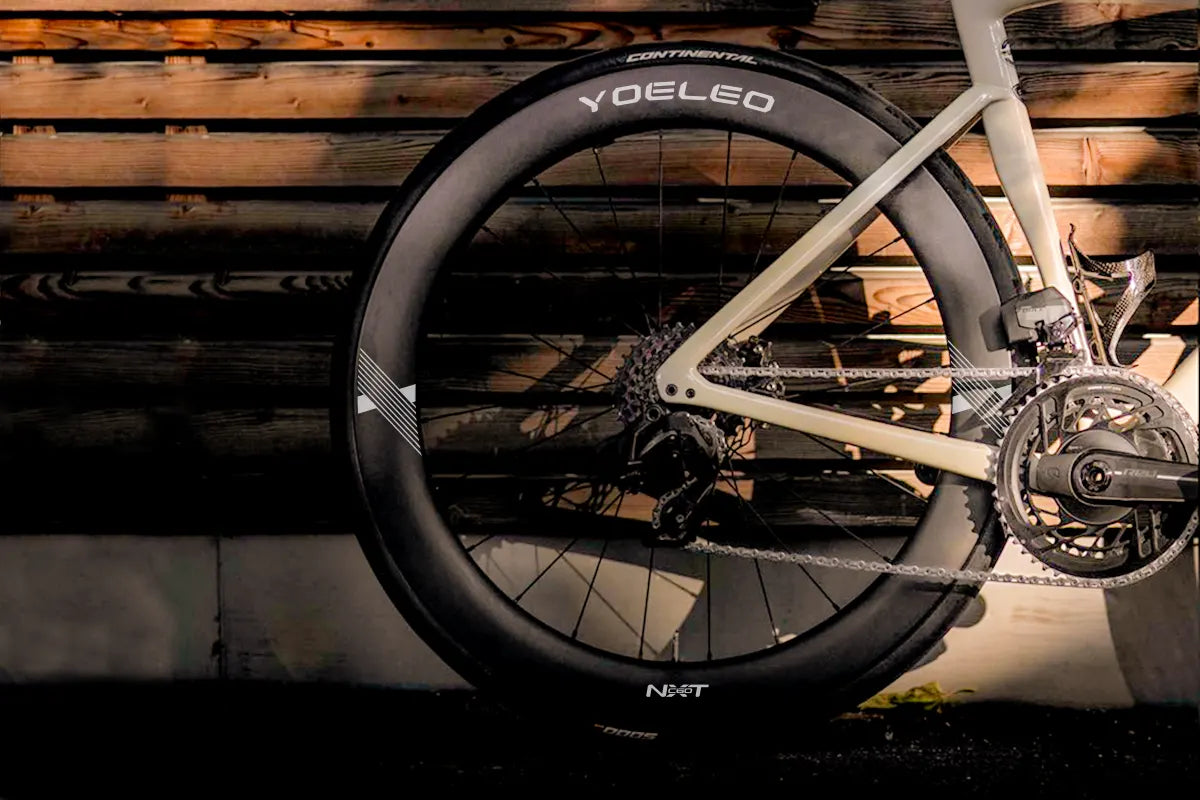
The NxT SL2 road wheels use a 23mm internal rim optimized for 28–30c tires, spreading the tire into exactly that supportive low-pressure shape and turning a 28c into a true high-volume tire. They are tubeless-ready with no rim tape required, so you can drop to the pressures in the chart above without the pinch-flat penalty that punished tubed setups. And because low pressure invites the occasional bottom-out on a hard hit, it matters that these rims are tested to 120J of impact — three times the 40J UCI and industry benchmark — so the wheel takes the strike that low pressure lets through. That combination, a wide supportive rim plus genuine impact durability, is what makes running at your real sweet spot safe rather than a gamble.
Find your breakpoint, round down, and let a wide tubeless rim do the rest. It is the closest thing to free speed in cycling — and it costs nothing but a few minutes with a pump and a known loop.
Frequently Asked Questions
What tire pressure should I run on high-volume road tires?
Run the lowest pressure that stays stable in corners and doesn't bottom out. For most riders on 28–30c tubeless tires that is roughly 55–75 psi depending on weight, far below the old 90–100 psi. Start from a weight-based chart, then drop 2–3 psi at a time until the tire feels vague, and add a little back.
Is lower tire pressure really faster?
On real roads, yes, up to a point. Below your breakpoint pressure the tire absorbs road texture instead of bouncing, cutting impedance losses. Past the breakpoint, higher pressure increases vibration losses and slows you down. It is almost always better to be slightly too low than too high.
How much higher should rear tire pressure be than front?
Run the rear roughly 8–10% higher than the front, because more of your body weight sits over the rear wheel. For example, a 65 psi front might pair with about 70–72 psi rear. Adjust both down together if the ride feels harsh, keeping the same split.
Can I run low pressure without pinch flats?
On high-volume tubeless tires, yes. The larger air volume and the absence of an inner tube remove most of the pinch-flat risk that came with narrow tubed setups, which is why low, fast pressures are now practical. A wide internal rim and an impact-tested rim add further security against bottom-outs.
Share:
Road Bike Spoke Failures: Causes & How to Avoid Them
Road Tire Width: The Debate That Could Change Your Race