For thirty years the answer was obvious: narrow tires are faster. Pros raced on 21mm and 23mm rubber pumped rock-hard, and everyone copied them. Then the data caught up with the dogma — and the entire WorldTour changed its mind. Today the tire width debate is the most consequential, least understood choice a racing cyclist makes. Get it right and you find free speed and confidence. Get it wrong and you are slower, harsher, and more fragile exactly when it counts. Here is how the debate actually resolves.

Is a Wider Tire Faster?
On real-world roads, a wider tire run at the correct lower pressure usually rolls as fast or faster than a narrow one — while adding grip and comfort. The old "narrow is faster" rule was true mainly on glass-smooth surfaces.
That is the headline, but the reasoning is what lets you make the right call for your race. Speed is not one number — it is a balance of three forces, and tire width pushes on all three at once.
The Three Forces in the Debate
Every tire choice trades between rolling resistance, aerodynamics, and the losses caused by a rough road. Narrow and wide tires win different battles.
Rolling Resistance
Here is the counterintuitive part. At the same casing tension and pressure, a wider tire deforms over a shorter, fatter contact patch than a narrow one, which loses slightly less energy to the casing flexing. Independent testing has repeatedly found that wider tires do not roll slower once you normalise for casing tension — and on real pavement they often roll faster (BikeRadar, 2025).
The reason is that a wider tire can be run at a lower pressure without the casing over-deforming, and lower pressure is the key to the third force below.

Real-Road Impedance
A smooth lab drum and a real road are different planets. On actual tarmac, a hard narrow tire cannot absorb surface texture, so the bike vibrates — and every vibration is energy stolen from forward motion. These are called impedance or suspension losses, and they rise steeply as pressure and stiffness increase. A wider tire at lower pressure soaks up the road instead of bouncing off it, cutting those losses on anything rougher than a velodrome.
|
KEY INSIGHT
• On a perfectly smooth surface, a narrow high-pressure tire can still win. On real roads — chip-seal, cracks, gravel-strewn corners — the wider tire's ability to run lower pressure makes it the faster, calmer choice. Most races are not held on velodromes.
|
Aerodynamics
This is the narrow tire's last stronghold, and it is real: a narrower tire presents a smaller frontal area and integrates more cleanly with the rim. But aero only pays when the tire and rim are matched. When a tire balloons significantly wider than the rim that carries it, airflow separates at the junction and drag climbs — so an oversized tire on a too-narrow rim can erase its own rolling-resistance advantage at speed.
Why the Pro Peloton Moved Wider
The strongest evidence in this debate is what the fastest riders in the world actually choose. WorldTour racers have largely abandoned 23mm and 25mm tires in favour of 28mm and even 30mm options (Cyclist, 2025). These are teams with wind tunnels, power meters, and millions in sponsorship — they did not go wider for comfort. They went wider because, on real race roads, it is faster and it corners with more confidence.
|
THE WIN
• The pro shift settles the old argument. The fastest setup is no longer the narrowest — it is the widest tire that still matches your rim and your roads, run at the right pressure.
|
The Number Everyone Forgets: Measured vs Labeled Width
A "28mm" tire is not 28mm. Tire width is shaped by the rim it sits on. Mount a 28c tire on a modern wide rim and it can measure 30mm or more — because the wider the internal rim, the more the bead is spread and the taller and rounder the tire sits.
This matters for the debate in two ways. First, the tire that matches your frame clearance is narrower on the label than you think — check measured width, not the print. Second, a wide internal rim turns a 28c tire into a high-volume tire that you can run at lower pressure, capturing the rolling and impedance benefits without buying a physically bigger tire.
|
Riding Context
|
Practical Width (labeled)
|
Why
|
|
Smooth crit / time trial
|
26–28mm
|
Aero edge on clean surfaces, fast acceleration
|
|
All-round road racing
|
28–30mm
|
Best balance of rolling speed, aero, and grip
|
|
Rough road races / classics
|
30–32mm
|
Lower pressure, traction, fewer punctures on broken roads
|
|
Endurance / poor surfaces
|
30–32mm+
|
Comfort and control dominate over marginal aero
|
The Tire-and-Rim System
The single biggest mistake in this debate is treating the tire as a standalone choice. It is half of a system; the rim is the other half. A useful guideline from aerodynamic testing is the "rule of 105" — the rim's external width should be roughly 105% of the tire's measured width so air flows off the rim onto the tire, not the reverse. Pair a wide tire with a rim built to carry it and you get the rolling-resistance win and clean aerodynamics. Pair it with a too-narrow rim and you give back at speed what you gained on the road.
So the real question is not "what tire width is fastest?" It is "what tire width is fastest on my rim, on my roads?"
Common Myths
Myth: Wider tires are only about comfort. Reality: comfort is a byproduct; the primary gains are lower impedance losses on real roads and more cornering grip, which is why race teams adopted them.
Myth: Wider always means slower because of aero. Reality: aero only suffers when the tire outgrows the rim. On a matched wide rim, a 28–30mm tire can be both fast-rolling and aerodynamically clean.
Myth: You should pump wide tires hard to keep them fast. Reality: the opposite — the whole point of a wider tire is the ability to run lower pressure, which is where the speed and grip come from.
Choosing Your Race-Day Width
Match the rubber to the route and the rim, not to tradition. For a smooth criterium or a flat time trial, a 26–28mm tire on a matched rim keeps you aero and snappy. For a typical road race on imperfect tarmac, 28–30mm is the modern sweet spot. For broken roads, classics-style courses, or long days on rough surfaces, 30–32mm pays you back in speed, grip, and fewer flats.
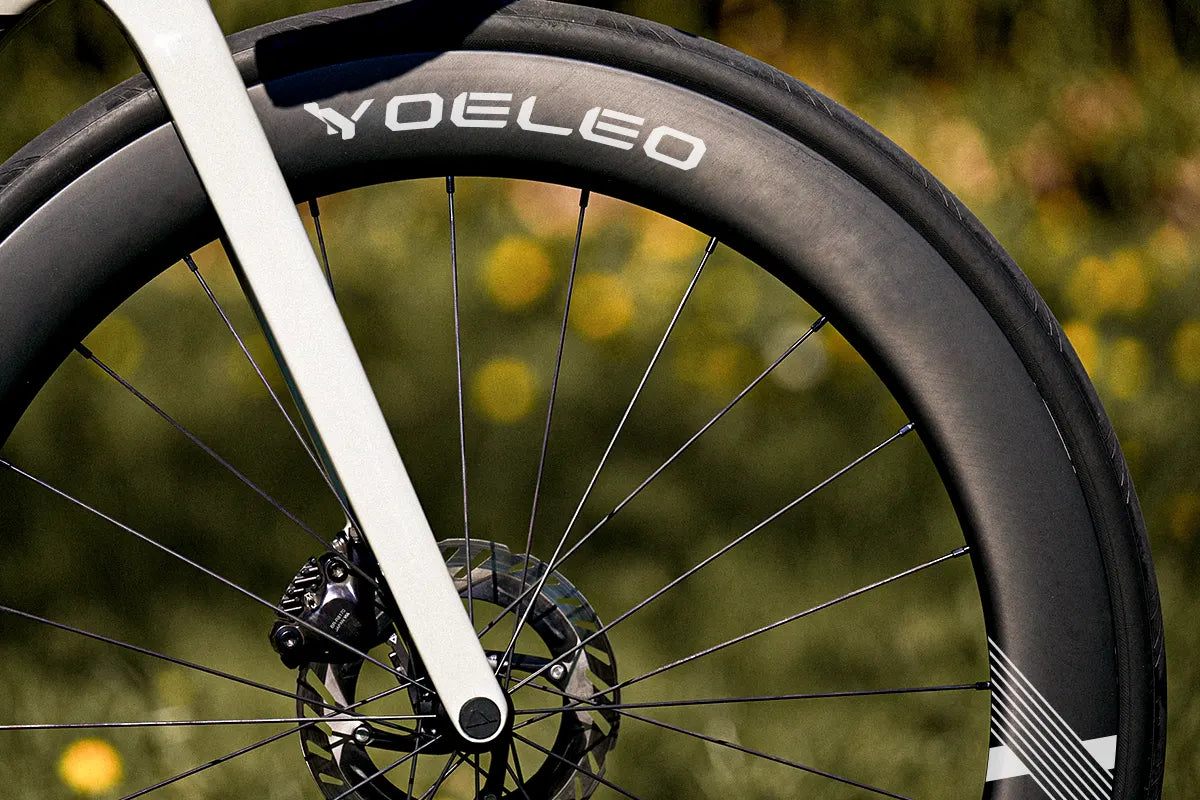
This only works when the rim is built for it — and that is where the wheel comes in. The NxT SL2 road wheels run a 23mm internal and 32mm external rim profile, engineered specifically to maximize modern high-volume rubber.
When you mount a labeled 28c tire onto the wide 23mm internal rim, the casing spreads into a rounder, higher-volume shape that measures exactly 30mm. This creates a flawless marriage with the 32mm external rim width, hitting the Rule of 105 perfectly (32mm is roughly 106% of 30mm) for optimal high-speed aerodynamics.
For rougher race routes or classics-style courses where soaking up road vibration matters more than slicing through the wind, stepping up to a labeled 30c tire expands your air volume even further for ultimate comfort and puncture resistance, prioritizing mechanical grip over absolute aerodynamic optimization.

Frequently Asked Questions
Are wider road tires actually faster?
On real roads, yes — a wider tire run at the correct lower pressure usually rolls as fast or faster than a narrow one while adding grip and comfort. The old "narrow is fastest" rule held mainly on smooth surfaces. On rough pavement, lower pressure cuts impedance losses that hard narrow tires suffer.
What tire width do pro cyclists use now?
Most WorldTour riders have moved from 23–25mm to 28mm and often 30mm tires (Cyclist, 2025). They switched because wider tires on modern wide rims roll faster on real race roads and corner with more confidence, not for comfort. The exact width varies with the course surface.
Does tire width need to match rim width?
Yes. A tire measures wider on a wider internal rim, and aerodynamics suffer if the tire balloons much wider than the rim's external width. The "rule of 105" suggests the rim's outer width should be about 105% of the measured tire width for clean airflow and the full rolling-resistance benefit.
Is a 28mm or 30mm tire better for racing?
For most road racing on imperfect tarmac, 28–30mm is the sweet spot of rolling speed, aerodynamics, and grip. Choose 28mm for smoother, more aero-sensitive courses and 30mm for rougher roads — and confirm both fit your rim and frame as a measured, not labeled, width.

Share:
Tire Pressure: The Sweet Spot for High-Volume Wheels
Aero vs Lightweight Wheels: The Climbing Tipping Point