
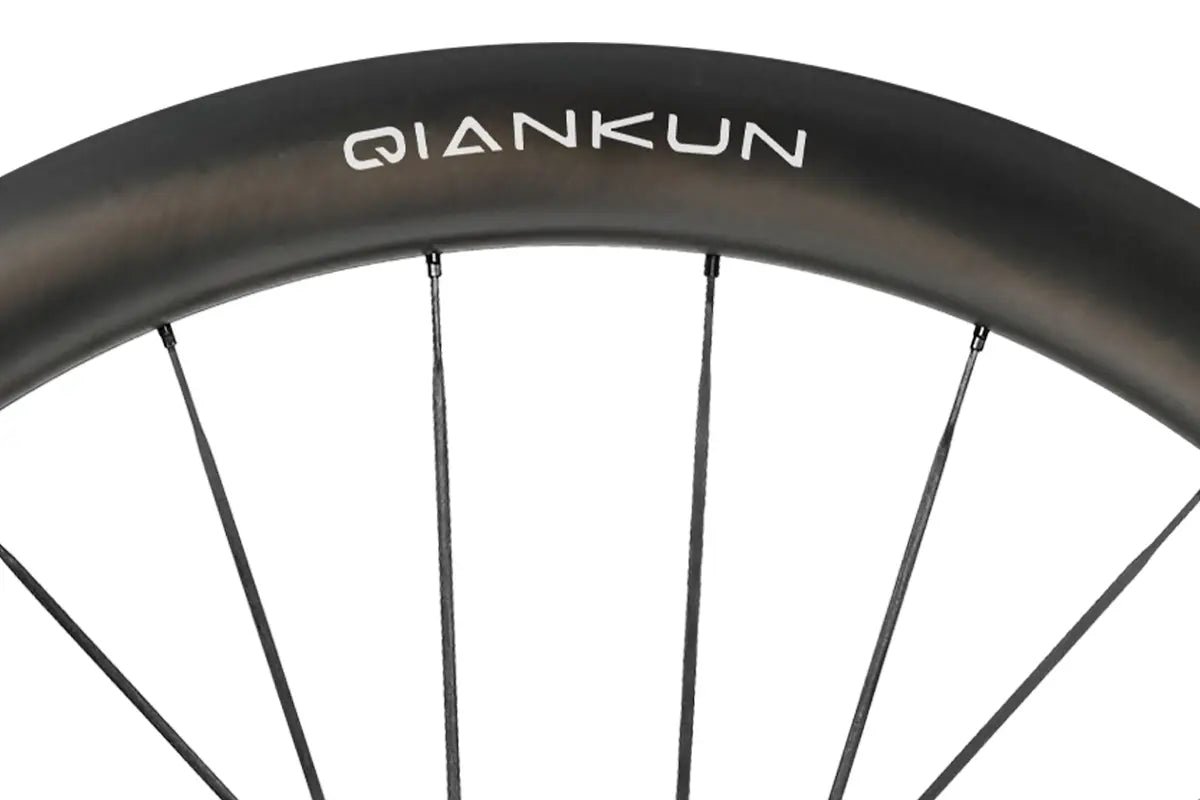
Spokes are the most overlooked part of a wheel. Riders agonize over rim depth and hub engagement, then ignore the 24 slim tensioned members actually holding the wheel together and transmitting every watt from hub to rim. Yet the spoke material — steel or carbon — shapes how a wheel accelerates, how it soaks up the road, what it weighs where it matters most, and how easily you fix it when something goes wrong. Here's the real mechanics, without the marketing.
Quick Verdict for Skimmers
Choose carbon spokes if you want maximum stiffness, the lowest rotational weight, and the sharpest acceleration for racing, climbing, and sprinting — and you're buying at the premium end.
Choose steel spokes if you value a more forgiving ride, proven durability, easy and inexpensive repair anywhere, and strong all-round value. For most riders, modern bladed steel spokes deliver the vast majority of the performance at a fraction of the cost and complexity.
What a Spoke Actually Does
A bicycle spoke does three jobs at once, and the material affects all three.
It carries load in tension. A wheel hangs from its upper spokes; every spoke is pre-tensioned so it never goes slack under load. It transfers torque, taking the rotational force from the hub and driving it into the rim and tire. And it provides a small amount of compliance, flexing fractionally to take the edge off road shock.
|
KEY INSIGHT
• Stiffer is not automatically better. A spoke that's too stiff transmits more road buzz; one that's too elastic can feel vague under power. The "best" spoke is the one tuned to the wheel's job — not simply the stiffest material available.
|
Head-to-Head: Steel vs Carbon
|
Factor
|
Steel Spokes
|
Carbon Spokes
|
|
Stiffness
|
Reference baseline
|
~7–8% stiffer (lab testing)
|
|
Ride feel
|
More elastic, forgiving
|
Firmer, more direct
|
|
Weight
|
Heavier per spoke
|
Lighter; less rotational mass
|
|
Power transfer
|
Excellent
|
Marginally sharper
|
|
Repairability
|
Inexpensive, universal, anywhere
|
Premium; modern designs replaceable
|
|
Aerodynamics
|
Strong with bladed profiles
|
Strong; wide flat profiles
|
|
Value
|
Outstanding
|
Premium price
|

Steel Spokes: The Proven Standard
Steel — usually stainless — has been the spoke material of choice for over a century, and not by accident. It has an ideal blend of high tensile strength, predictable fatigue life, and enough elasticity to build a durable, forgiving wheel.
That elasticity is the underrated virtue. A steel spoke stretches a tiny, controlled amount under load, which lets the wheel absorb road imperfections rather than transmit every one to your hands. Modern bladed steel spokes — flattened into an aero profile — also cut through the air nearly as cleanly as carbon while keeping steel's toughness.
|
THE WIN
• A broken steel spoke is a roadside-or-shop fix with an inexpensive, universal part. That repairability is a real-world performance feature, not a consolation prize — it's why steel-spoked wheels remain the dependable default for daily training and long-haul riding.
|
The trade-off is weight. Steel spokes are heavier than carbon, and because that weight sits out toward the rim, it adds to rotational inertia — the mass you have to spin up every time you accelerate.
Carbon Spokes: The Performance Edge
Carbon fiber spokes take a different path. Carbon is far stiffer than steel for its weight, so a carbon spoke can be both lighter and more rigid at the same time.
Independent lateral-stiffness testing has measured carbon-spoked wheels at roughly 7–8% stiffer than equivalent steel-spoked builds. In practice that reads as a crisper, more immediate response when you stamp on the pedals or throw the bike into a sprint, plus a touch more precision when the wheel is loaded hard in a corner.
The bigger story is rotational weight. Shaving mass from the spokes removes it from a fast-spinning radius, which lowers the effort to accelerate and to climb in surges. For racing — KOM hunts, breakaways, sprint finishes — that responsiveness is the whole point.

|
KEY INSIGHT
• Carbon's advantage is sharpest in repeated accelerations, not steady cruising. At a constant speed the difference is small; in a race that surges, the lighter, stiffer wheel keeps answering every kick.
|
Power Transfer: How Much Does It Really Matter?
Here's the honest engineering. A stiffer wheel does transfer power more directly and resists brake-rub flex better — but the actual watts "lost" to spoke flex on any well-built wheel are small. The rim, tire, and your tire pressure dominate both ride compliance and rolling resistance far more than spoke material does.
So treat spoke stiffness as a feel-and-precision upgrade, not a free-watts machine. Carbon spokes make a good wheel feel sharper and more eager; they don't rewrite your power numbers. Anyone claiming big wattage from spokes alone is overselling.
Comfort: Where the Road Disappears
If carbon is stiffer, does it ride harsh? Not necessarily — because spokes are only one part of the comfort equation, and a small one. The largest comfort levers are tire width and pressure, then the rim, then the frame and contact points.
Steel's extra elasticity gives a marginally more forgiving wheel, which lighter riders or endurance riders on rough roads may appreciate. But a carbon-spoked wheel paired with a wide tubeless tire at a sensible pressure is plenty comfortable — the tire is doing the real work. See our wider rims guide for the bigger comfort picture.
Repairability: The Myth Worth Killing
The oldest knock on carbon spokes is "you can't fix them." That used to be true. It isn't anymore.
Steel still wins on pure convenience: parts are inexpensive and available in any bike shop on earth. But modern carbon spoke systems are designed to be individually replaceable — a single damaged spoke can be swapped rather than condemning the wheel. That single design change removes the biggest historical reason to avoid carbon.
|
WATCH-OUT
• Replaceability depends on the design. Before buying any carbon-spoked wheel, confirm the spokes are individually serviceable and that replacements are stocked — not all carbon systems are equal.
|
Two Wheels, Two Philosophies: A Worked Example
Yoeleo builds both, which makes the trade-off easy to see.
The NxT SL2 wheels use Pillar Wing 20 bladed aero steel spokes — 24 per wheel, tensioned and tested to 600 KGF, on a 36T ratchet hub. They're chosen for exactly steel's strengths: a forgiving, durable, everyday-fast wheel with spokes that are simple and inexpensive to service. It's performance value done properly — engineered for the rider who trains, races occasionally, and wants a wheel that just keeps working.
The race-focused QianKun CS line runs carbon aero spokes with a Two-in-One alignment and 2:1 front lacing for stiffness where it counts — and those carbon spokes are individually replaceable, closing the old repairability gap. It's built for the rider chasing every watt of response in a sprint or on a climb.
Both are tested to the same rigorous standard — 120J of rim impact, three times the 40J industry and UCI benchmark, and 600 KGF spoke tension — so the choice is purely about the ride you want, not about which one is built better. That's the point: steel or carbon, the spoke should match your riding, and a good brand lets you pick the philosophy rather than forcing one on you.

Common Myths
Myth: Carbon spokes are always faster. Reality: they're stiffer and lighter, which helps acceleration and feel, but steady-state speed is dominated by aero and tires. The gap is about response, not raw pace.
Myth: Steel spokes are outdated. Reality: modern bladed steel is light, aero, durable, and endlessly repairable — the reason it's still the default on most performance wheels.
Myth: Carbon spokes can't be repaired. Reality: current carbon spoke systems are designed to be individually replaceable, eliminating the original objection.
The Verdict
Carbon spokes are the right call for racers and weight-and-stiffness obsessives who want the sharpest response and the lowest rotational mass, and who are buying premium. Steel spokes — especially modern bladed designs — are the smart all-round choice for nearly everyone else, delivering most of the performance with better value and unbeatable repairability. Neither is "better." They're tuned for different riders, and the best wheel is the one whose spokes match how you ride.
Frequently Asked Questions
Are carbon spokes worth it over steel?
Carbon spokes are worth it if you race or prioritize acceleration and stiffness, since they're about 7–8% stiffer and lighter where rotational weight matters most. For training, endurance, and value, modern bladed steel spokes deliver most of the performance and are far less expensive to repair.
Do carbon spokes give more power transfer?
Carbon spokes are stiffer, so a wheel feels crisper and more direct under hard efforts and resists brake-rub flex. But the actual watts gained are small; rim, tire, and pressure affect speed far more. Treat carbon spokes as a feel-and-precision upgrade, not a wattage machine.
Are steel spokes more comfortable than carbon?
Steel's slightly greater elasticity gives a marginally more forgiving wheel, which some endurance riders prefer. However, tire width and pressure dominate comfort far more than spoke material, so a carbon-spoked wheel with a wide tubeless tire rides comfortably for most riders.
Can carbon spokes be replaced if one breaks?
Yes, on modern systems. Older carbon spokes often meant replacing the whole wheel, but current designs — including Yoeleo's QianKun carbon spokes — are individually replaceable. Always confirm a wheel's carbon spokes are individually serviceable and that spares are stocked before buying.
Share:
Hookless vs Hooked Rims: Pros, Cons & Safety (2026)
Road Bike Spoke Failures: Causes & How to Avoid Them