
Off-Season Storage: Putting a Carbon Bike Away for Three Months
A bike that goes into storage clean and comes out three months later stiff, gritty, or smelling faintly of mildew didn't fail because of anything dramatic. It sat in a damp garage corner, tires flat, chain dry, clamped tightly by a thin frame tube on a stand, and every one of those small choices compounded over ninety days into preventable problems.
Carbon fiber itself is inert once cured; humidity and reasonable temperature swings don't attack carbon the way they attack metal. What degrades is everything else on the bike: bearing grease, cable housing, aluminum hardware, rubber seals, and the resin's clearcoat if UV exposure is added to the mix. Off-season storage is really about protecting those non-carbon components.
How do you store a carbon bike for the off-season? Clean it, dry it fully, protect the bearings and drivetrain from corrosion, keep it in 40–60% relative humidity between 15–25°C (59–77°F), and support it by its wheels, a wall rack, or clamped by the seatpost—never clamped tightly by the frame tubes.
How do you store a carbon bike for the off-season?

Humidity and temperature: the numbers that matter
|
Condition
|
Range
|
Effect
|
|
Relative humidity, ideal
|
40-60%
|
No accelerated corrosion or grease degradation
|
|
Relative humidity, risk threshold
|
above 70%
|
Corrosion on bolts, bearing races, and cable ends accelerates
|
|
Temperature, ideal
|
15-25°C (59-77°F)
|
Stable, no condensation risk from swings
|
|
Temperature, avoid
|
repeated swings through 0°C or above 35°C (95°F)
|
Condensation forms inside tubes and bearing cups as temperature swings
|
|
Direct sunlight exposure
|
none, for 3+ months
|
Prevents UV degradation of clearcoat and graphics over time
|
A basic hygrometer removes the guesswork. If the room reads consistently above 70%, a small dehumidifier or moving the bike off a cold concrete floor and away from exterior walls brings it safely into range.

Protecting bearings during storage
Bearings suffer during long storage because grease isn't circulating to distribute protection. Before long storage, wipe a light film of waterproof grease onto exposed hub end caps, headset spacers, and bottom bracket seals. Check for play by hand; if bearings feel gritty before storage, address them now, as standing moisture will only worsen their condition.
This preventive wipe-down takes under five minutes per wheel and creates a hydrophobic barrier against ambient moisture.
Tyres, chain and drivetrain prep
Where and how to position the bike
Leaning Against a Wall: Avoid leaving a bike leaning loosely against a wall in high-traffic areas, as it can easily be knocked over, causing unnecessary frame or hanger damage. Use a floor stand or wall mount whenever possible.
Common storage mistakes to avoid
Storing a Bike Wet or Dirty: Storing a bike right after a wet ride without a wash and dry trap road salt, moisture, and road grime against alloy hardware and bearing seals, causing galvanic corrosion while sitting still.
Ignoring the Environment: Storing a bike in an unheated shed or attic where drastic temperature shifts cause condensation to pool inside the frame tubes and bottom bracket shell.
Over-Clamping Frame Tubes: Leaving a repair stand clamp tightened down on a delicate carbon top tube or seat tube for extended periods.
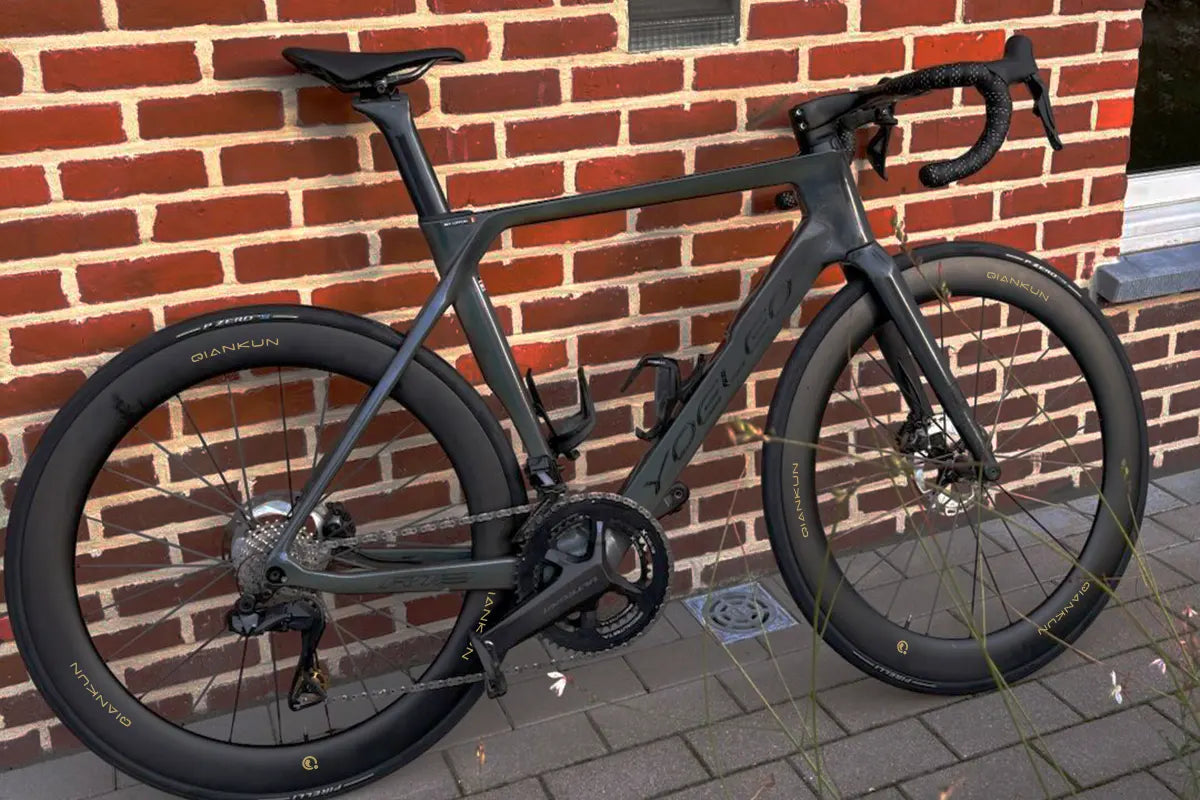
Worked example: storing an R12 with QianKun wheels for a 3-month off-season
Day 0: Prep
-
Full wash, thorough towel-dry, and chain cleaned and lubricated.
-
Tires inflated to normal riding pressure (e.g., 65–75 PSI for tubeless wide setups; do not over-pressurize rims).
-
Hub end caps and exposed bearing seals wiped with a light grease film.
-
Headset and bottom bracket play checked by hand (both smooth).
-
Bike moved to a dry spare room reading 52% relative humidity and 19°C (66°F), supported on a padded rack or clamped by the seatpost.
Month 1 & 2: Mid-Storage Check
-
2-minute visual check: confirm humidity levels remain between 40–60% and check tire pressure. No extra lube or teardown required.
Month 3: Post-Storage Wake-Up
-
Top up tire pressures.
-
Re-check headset, bottom bracket, and wheel bearings for smooth rotation.
-
Wipe off any light storage dust and conduct a quick torque check on stem and handlebar bolts before the first ride.
Frequently Asked Questions
What humidity should I store my bike at?
Should I store a bike with tyres inflated or deflated?
Can I hang a carbon bike by the wheel for storage?
Do I need to relube a bike after 3 months of storage?
Share:
Flying With a Carbon Frameset: Packing So Nothing Cracks
Wet-Weather Braking on Carbon Disc Wheels