
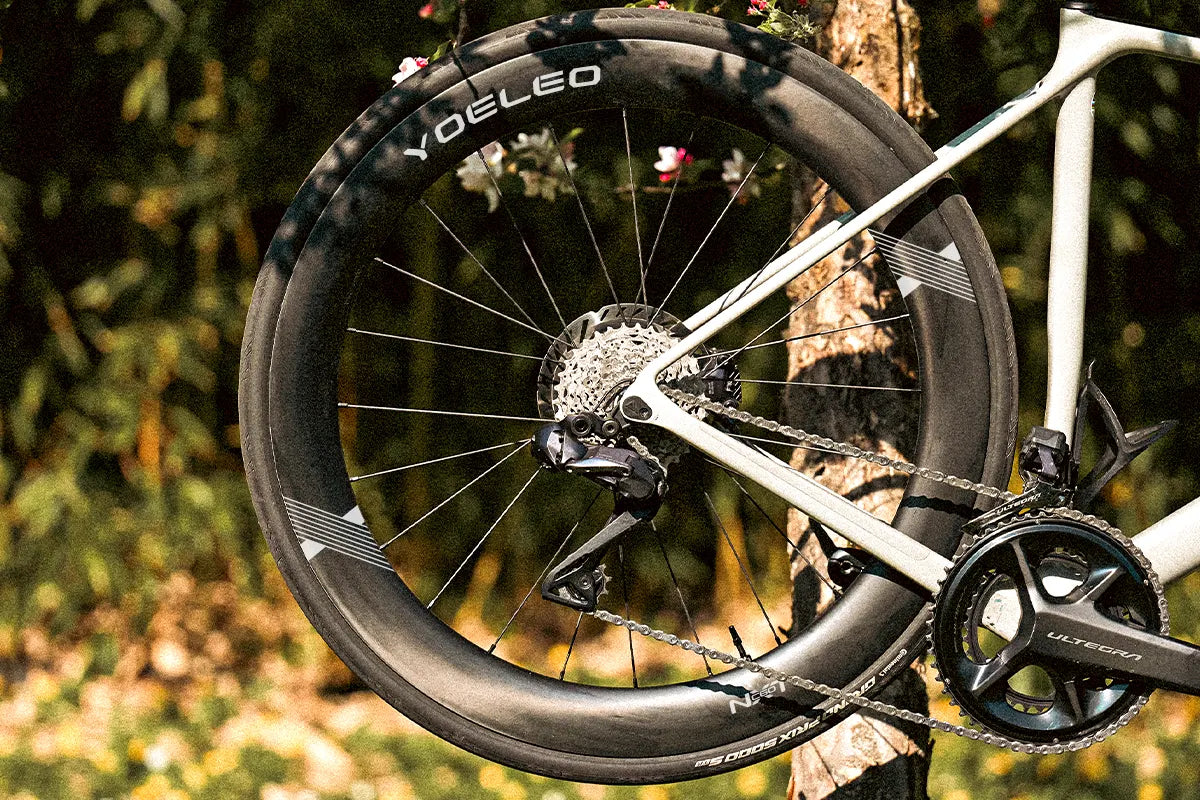
The NxT SL2 range offers three depths that look similar on a spec sheet and completely different on the road. Forty-six grams separates the C35 from the C60. That is less than a full water bottle. But those 46 grams sit at the rim — where mass effects are amplified — and those 25mm of extra depth change how the wheel interacts with wind, climbs, and sprints in ways the number alone does not capture.

Most buyers spend weeks going back and forth between C35, C50, and C60 before settling on the middle option by default, hoping it was the right call. This guide gives you the framework to make that choice deliberately — matched to how you actually ride, not how you imagine you might ride someday.
|
DEPTH SELECTOR IN 30 SECONDS
• C35: climbing, hilly routes, variable wind, versatile all-year use — the default for riders who cannot choose one terrain
• C50: all-round road, the most popular choice, meaningful aero without significant crosswind penalty
• C60: flat and rolling routes where you sustain speed above 35 kph — a specific tool for a specific job
|
The Three Axes of Rim Depth: Aero, Weight, and Crosswind
Rim depth affects three performance variables that do not all move in the same direction. Understanding the trade-offs between aero gain, rotational weight, and crosswind sensitivity is the foundation of choosing correctly.
Aero gain scales with depth: deeper rims generate less pressure drag above 30 kph. Weight scales with depth too, but the NxT SL2 engineering — Filament Winding Technology with Toray T1000 carbon — keeps the C35-to-C60 weight difference narrow (1,260g vs 1,340g). Crosswind behaviour is where depth truly differentiates: each additional 10mm of depth increases the lateral sail area the wheel presents to side wind, which at yaw angles above 10–15° becomes a handling factor rather than just a comfort one.
C35: The Climber and the All-Rounder
The C35 is the right choice when climbing is a regular part of your route profile. At 35mm, it offers the lowest rotational mass in the NxT SL2 range — and rim mass matters disproportionately because every gram at the rim must accelerate both linearly and rotationally. Independent cycling physics analysis (including content from BikeRadar and Cycling Weekly) consistently shows that rim-mass savings are felt more acutely than equivalent savings elsewhere on the bike.
The C35 also excels in variable wind conditions. If you ride in coastal, open, or mountainous regions where crosswinds are unpredictable, a 35mm rim keeps handling predictable and manageable. For riders who want one set of wheels that works confidently in every condition, the C35 is the lowest-risk choice.
C50: The All-Round Sweet Spot
The C50 is the most popular choice in the NxT SL2 range for a clear reason: it delivers genuine aerodynamic performance on flat and rolling terrain without demanding the crosswind management that 60mm+ rims require. At 1,330g and with a 386g rim weight, it is 70g heavier than the C35 as a pair — a difference most riders will not feel on moderate climbs.

The C50 suits riders whose routes mix 200–400m climbs with substantial flat stretches, who sustain average speeds of 28–38 kph, and who want a single set of wheels for club rides, sportives, and occasional fast group rides. If you are buying one set of carbon wheels and your terrain is mixed, C50 is the defensible default.
C60: The Flat and Rolling Specialist
The C60 is a specific tool. It performs best when your route profile is genuinely flat or rolling — think coastal roads, flat criterium circuits, or open terrain with consistent wind direction — and when you sustain speeds where deeper aero profiles generate a measurable power saving. Hambini's independent wind tunnel analysis of the NxT SL2 C60 found positive aerodynamic performance versus the test baseline, validating the depth on real wheel geometry rather than manufacturer-modeled data.

The C60 asks one thing in return: confidence in crosswinds. At 60mm, the wheel presents more lateral surface area, and at yaw angles above 10–15° — common in open terrain — you feel the bike respond to gusts more actively. That is manageable with experience, but it is a real characteristic that deserves honest acknowledgment. Do not buy C60 hoping to adapt to it; buy it because your routes and riding style genuinely suit it.
Depth vs Terrain: The Decision Matrix
|
Your Riding Profile
|
Recommended Depth
|
Reason
|
|
Hilly routes, frequent climbing
|
Lowest rotational mass; manageable in all conditions
|
|
|
Mixed road — some hills, some flat
|
All-round sweet spot; meaningful aero without crosswind penalty
|
|
|
Mostly flat, open roads, avg 32+ kph
|
Aero gains are measurable; crosswind management is learnable
|
|
|
Coastal or high-wind region
|
Wind safety and handling confidence outweigh aero gain
|
|
|
Sportives across varied terrain
|
Single-wheel versatility without compromising on either axis
|
|
|
Club rides + occasional racing
|
C60 if your club rides are mostly flat and fast
|
|
|
Want one set year-round
|
Most versatile in variable conditions and seasonal weather
|
Mixed-Depth Combinations
Running different depths front and rear is a genuine performance strategy. A shallower front (C35 or C50) with a deeper rear (C50 or C60) gives you the crosswind handling confidence you need at the front wheel — where steering input is most affected by lateral forces — while capturing aero gains at the rear, where the rider's body provides a degree of wind shelter. The NxT SL2 range supports mixed combinations: C35/C50, C50/C60, and C60/C88 are all common choices.
The NxT SL2 Collection — Engineered for Real Riders
All three depths in the NxT SL2 range share the same engineering foundation: Toray T1000 carbon built with Filament Winding Technology for consistent wall thickness and reproducible construction. The internal 120J impact standard — three times the UCI minimum — means the rim is engineered for the loads of real-world road riding, not minimum compliance. Every wheel is hand-trued before shipping and runs a star ratchet freehub for fast, consistent engagement.
Hambini's independent wheelset dissection of the NxT SL2 C60, Peak Torque's self-purchased review of the Altera G21 build, and Cyclist's Hub's nine-plus independent reviews all validate that Yoeleo's engineering claims hold up under third-party scrutiny. This is the NxT SL2 range — a set of wheels you buy once and ride for years.
|
HOW YOELEO GIVES YOU THREE CORRECT ANSWERS
• C35 at 1,260g: lightest in the range, lowest rotational mass, confident in all conditions — the right call for climbing and variable-wind riding
• C50 at 1,330g: the all-round road wheel that most riders will never need to replace — a 70g rim-weight addition for meaningful flat-terrain aero
• C60 at 1,340g: Hambini-validated flat-terrain specialist — engineered to 120J (3x UCI minimum), tested to 100,000 fatigue cycles at 1,100N
• All three: tubeless-ready, star ratchet freehub, hand-trued — not a single specification compromised across the range
|
Frequently Asked Questions
Is C35 or C50 better for climbing?
C35 is the better climbing choice. Its lower rotational mass — 378g per rim versus 386g for C50 — produces a lighter, more responsive feel on sustained ascents. The weight difference is small in absolute terms but is amplified because it sits at the rim.
Will I notice the difference between C50 and C60 on flat roads?
Yes, but only above sustained speeds of roughly 32–35 kph and in calm or consistent wind conditions. Hambini's independent wind tunnel testing of the C60 confirmed positive aero performance, but the gain is terrain-specific — flat roads with manageable crosswinds are where C60 earns its depth.
Can I run C35 front and C60 rear?
Yes, and it is a practical combination. A shallower front wheel improves crosswind handling and steering confidence while a deeper rear captures aero gain where the rider's body provides partial wind shelter. All NxT SL2 depths are compatible as mixed pairs.
What is the internal width of the NxT SL2 rims?
Share:
Tire Pressure by Rider Weight Chart: Road & Gravel
Your First Carbon Wheelset: How to Pick the Right Depth