
Wheels

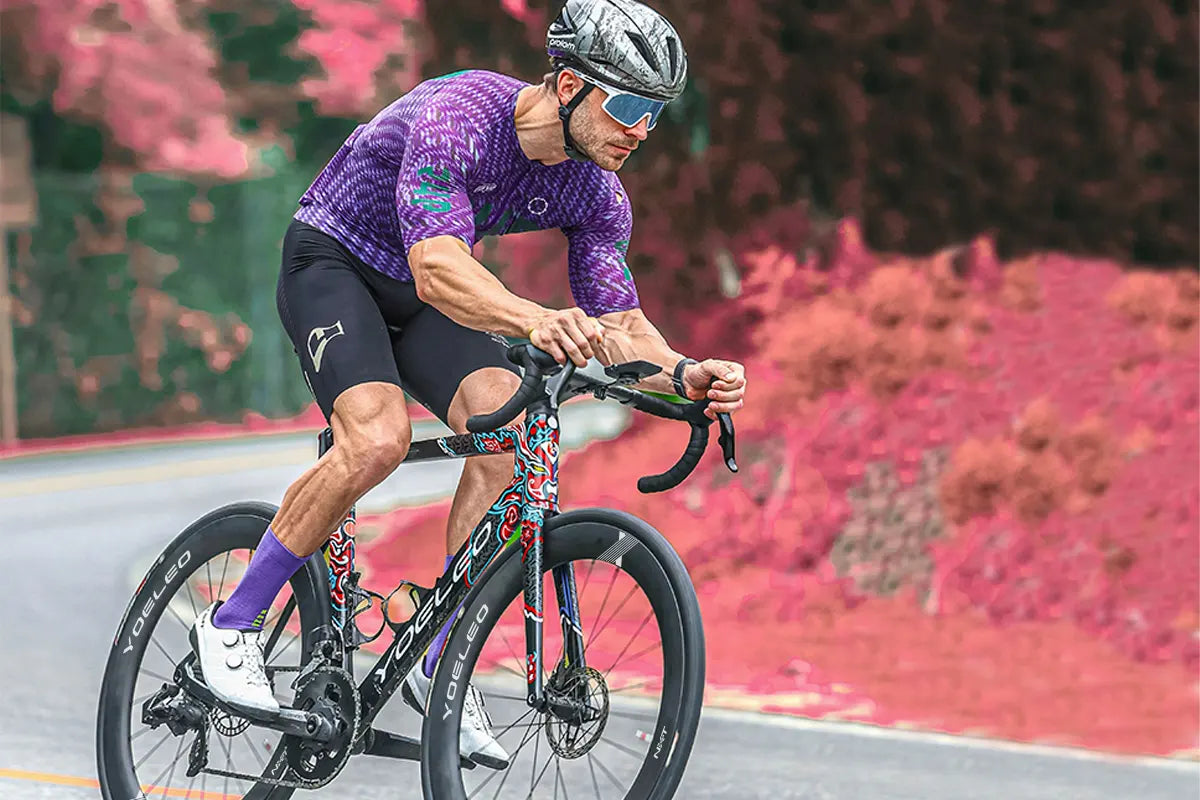
Rider using comfortable carbon wheels

Road Buzz vs Compliance: How Rims Shape Comfort

Your rims influence comfort, but they do not "dictate" it. The single biggest comfort lever is your tires — width and pressure — followed by the frame and contact points. The rim's real contribution is indirect: a wider internal rim lets you run a wider tubeless tire at lower pressure, which is where most of the smoothing actually comes from.

Carbon does not automatically ride softer than aluminum. A deep, very stiff carbon rim can feel harsher than a shallow alloy one. What matters is rim *design* — width, depth, layup, and spokes — not the material name on the decal.

Read moreabout Road Buzz vs Compliance: How Rims Shape Comfort
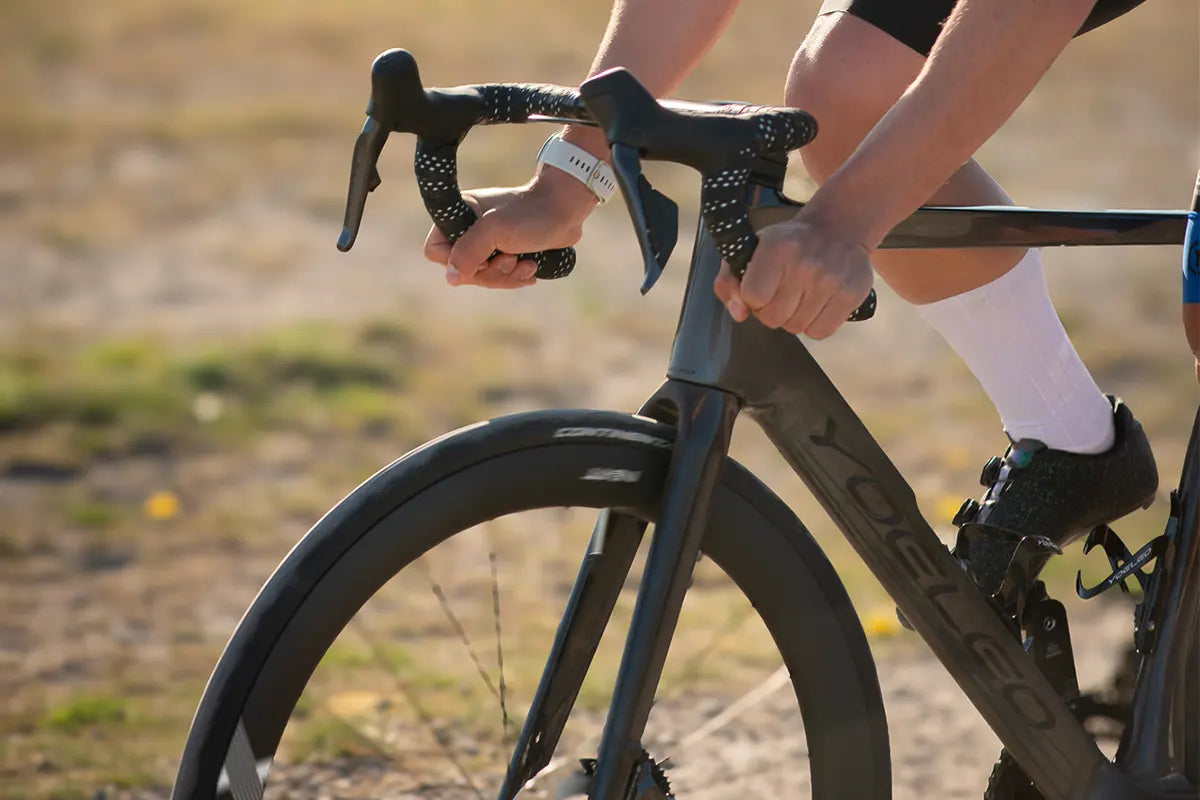
Rider on a light weight Yoeleo carbon wheels

The Fatigue Factor: Why Upgrade to Carbon Wheels
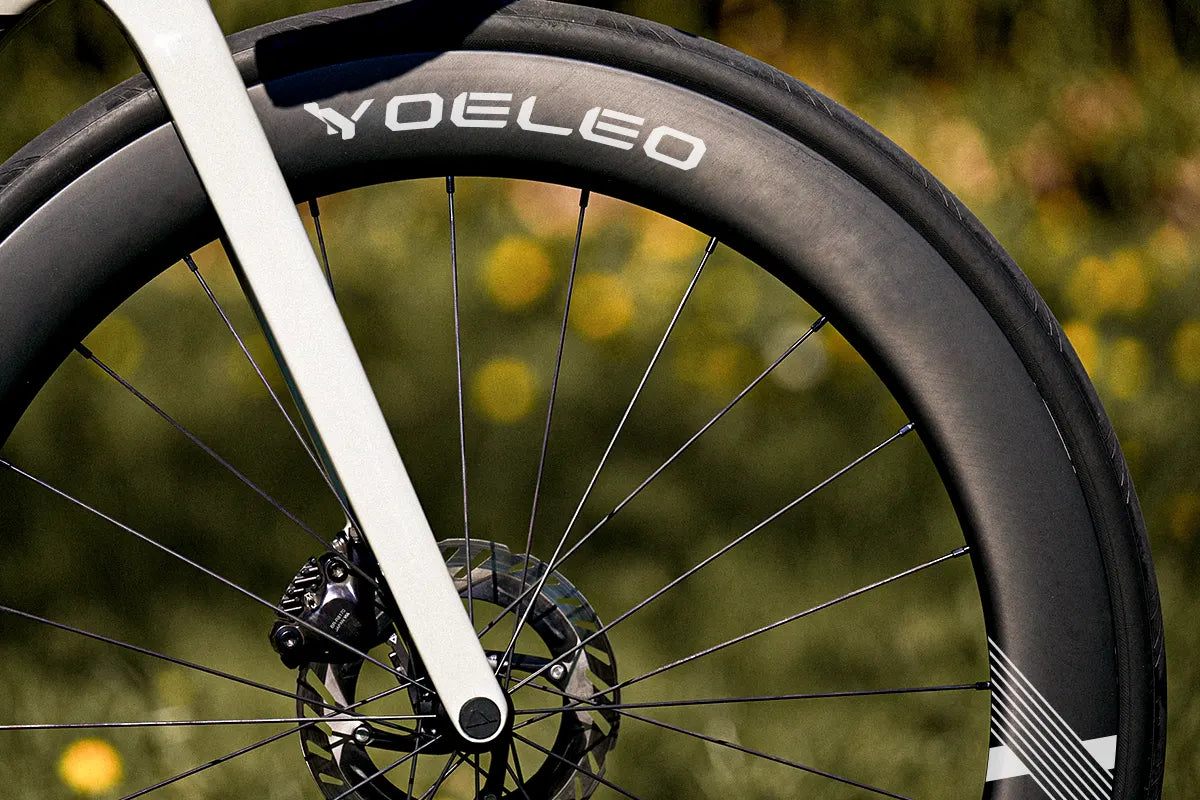
Upgrading from alloy to carbon won't make you fitter, but a good carbon wheelset can leave you fresher at the end of a long ride through three real mechanisms: less transmitted vibration, lower rotating weight to spin up, and — if it's tested and built properly — a longer service life.

The catch: modern alloy wheels are genuinely good, and tires still dominate comfort. The carbon upgrade pays off most if you ride long, climb a lot, accelerate repeatedly, or simply want the lightest, most responsive wheel that lasts. If you mostly cruise short and flat, the gain is smaller.

Read moreabout The Fatigue Factor: Why Upgrade to Carbon Wheels

Road Tire Width: The Debate That Could Change Your Race
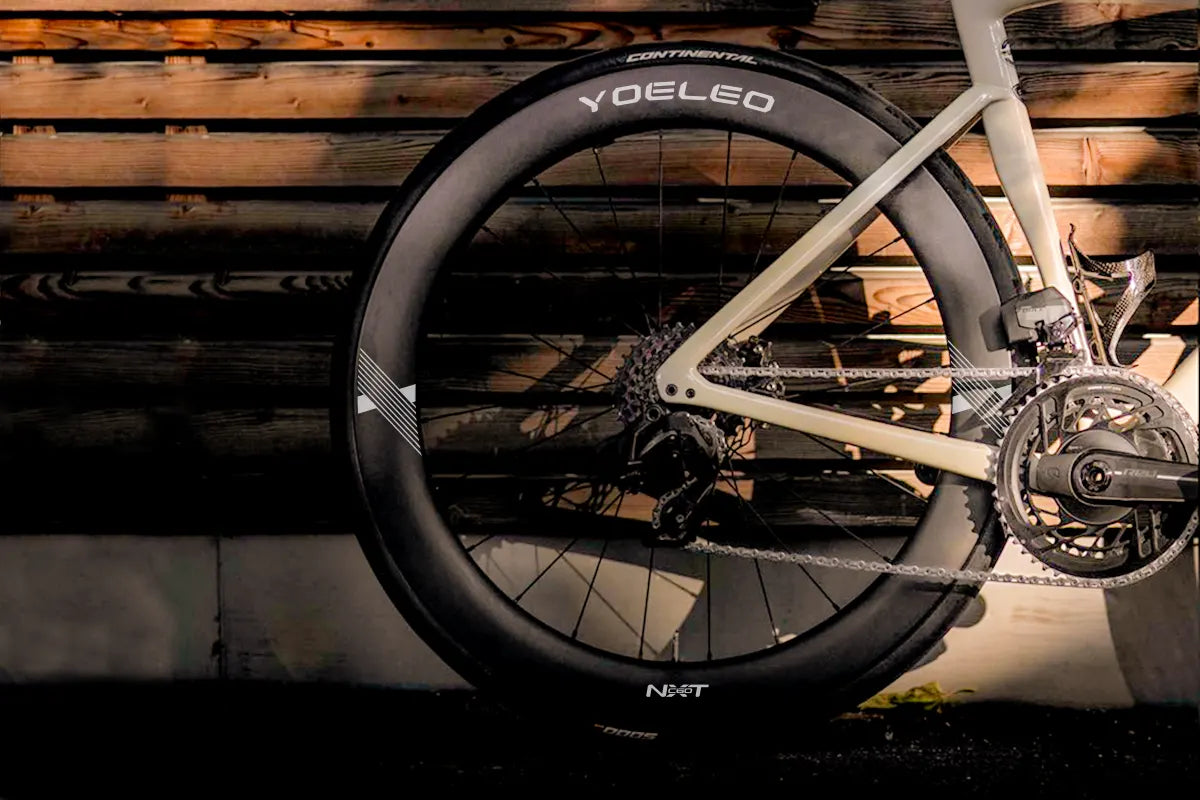
Road Tire Width: The Debate That Could Change Your Race

On real-world roads, a wider tire run at the correct lower pressure usually rolls as fast or faster than a narrow one — while adding grip and comfort. The old "narrow is faster" rule was true mainly on glass-smooth surfaces.

That is the headline, but the reasoning is what lets you make the right call for your race. Speed is not one number — it is a balance of three forces, and tire width pushes on all three at once.

Read moreabout Road Tire Width: The Debate That Could Change Your Race

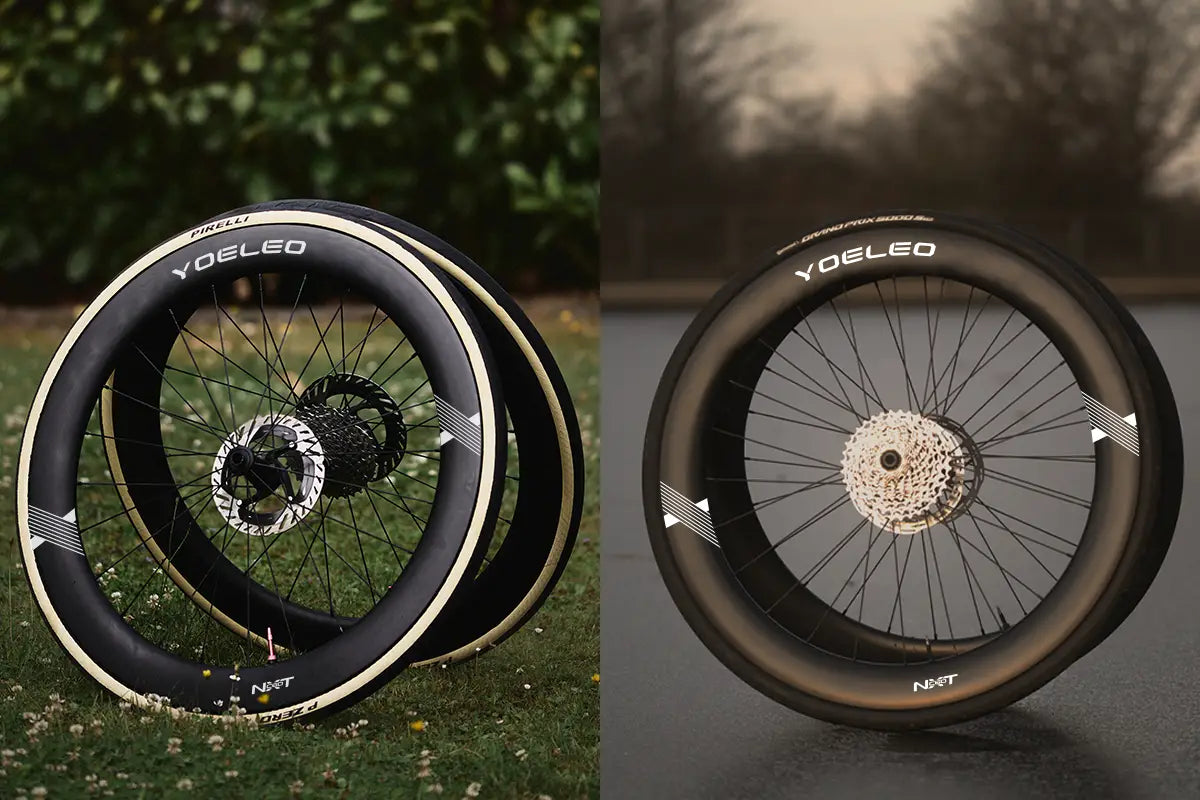
Yoleoe NxT SL2 using 28c tire

Tire Pressure: The Sweet Spot for High-Volume Wheels
The right tire pressure is the lowest pressure at which your tire still feels stable in corners and doesn't bottom out on impacts — because on real roads, slightly too low is faster and safer than too high.

That flips a century of "pump it up hard" wisdom on its head. To understand why, you need one concept: the breakpoint.

Read moreabout Tire Pressure: The Sweet Spot for High-Volume Wheels

28c vs 32c Road Tires: Which Width Is Faster in 2026?
28c vs 32c Road Tires: Which Width Is Faster in 2026?

Quick Verdict — 28c or 32c?

Choose 28c if you ride mostly smooth tarmac, race criteriums or short road events, and want the sharpest acceleration the wheel will give you. Choose 32c if you ride mixed-quality surfaces, log 4-hour-plus days in the saddle, or value comfort and grip more than the last gram. On a 23 mm internal rim like the NxT SL2, both widths work — they just

Read moreabout 28c vs 32c Road Tires: Which Width Is Faster in 2026?

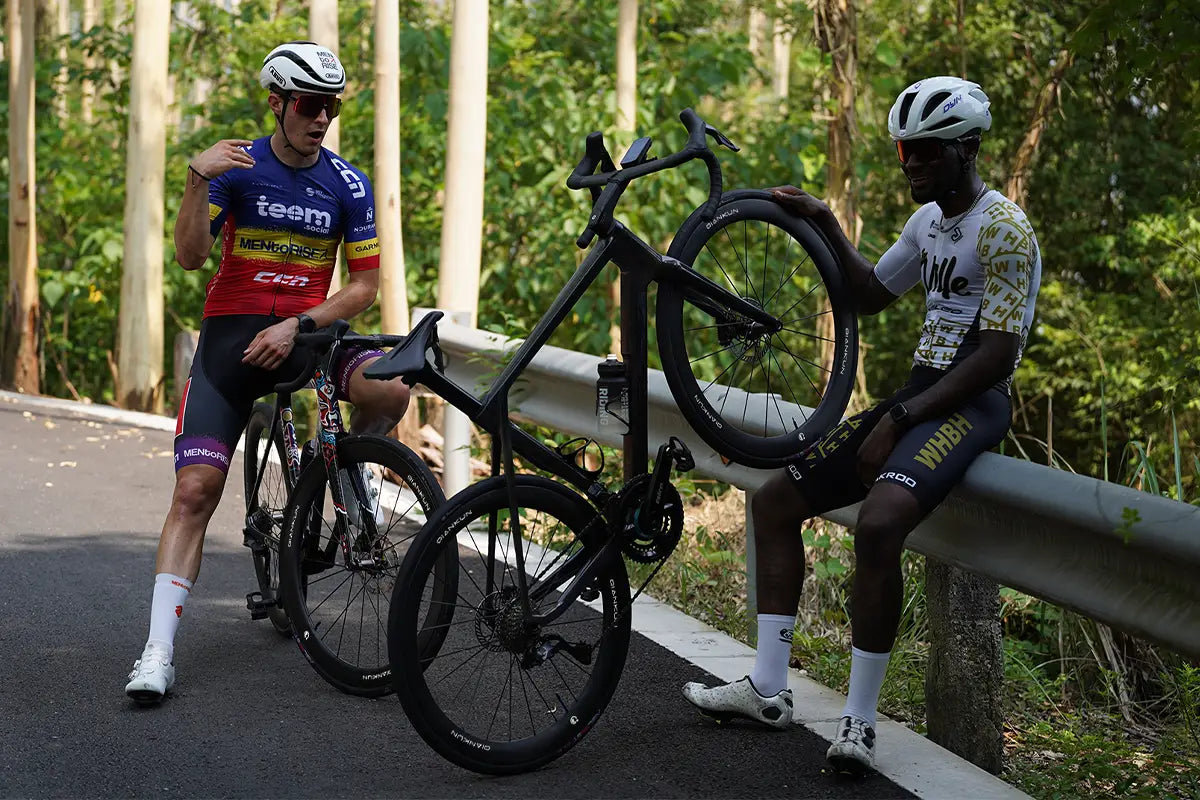
Riders Resting Holding QianKun Wheels

How to True a Carbon Wheel: The Complete Home Mechanic's Guide

Truing a carbon wheel at home is safe and effective for minor lateral and radial deviations (under 2 mm). You need a truing stand, spoke key or nipple wrench compatible with your wheel, and ideally a spoke tension meter. Work in quarter-turn increments, check tension frequently, and stop if you encounter a dented or cracked rim — that requires professional assessment.

Read moreabout How to True a Carbon Wheel: The Complete Home Mechanic's Guide
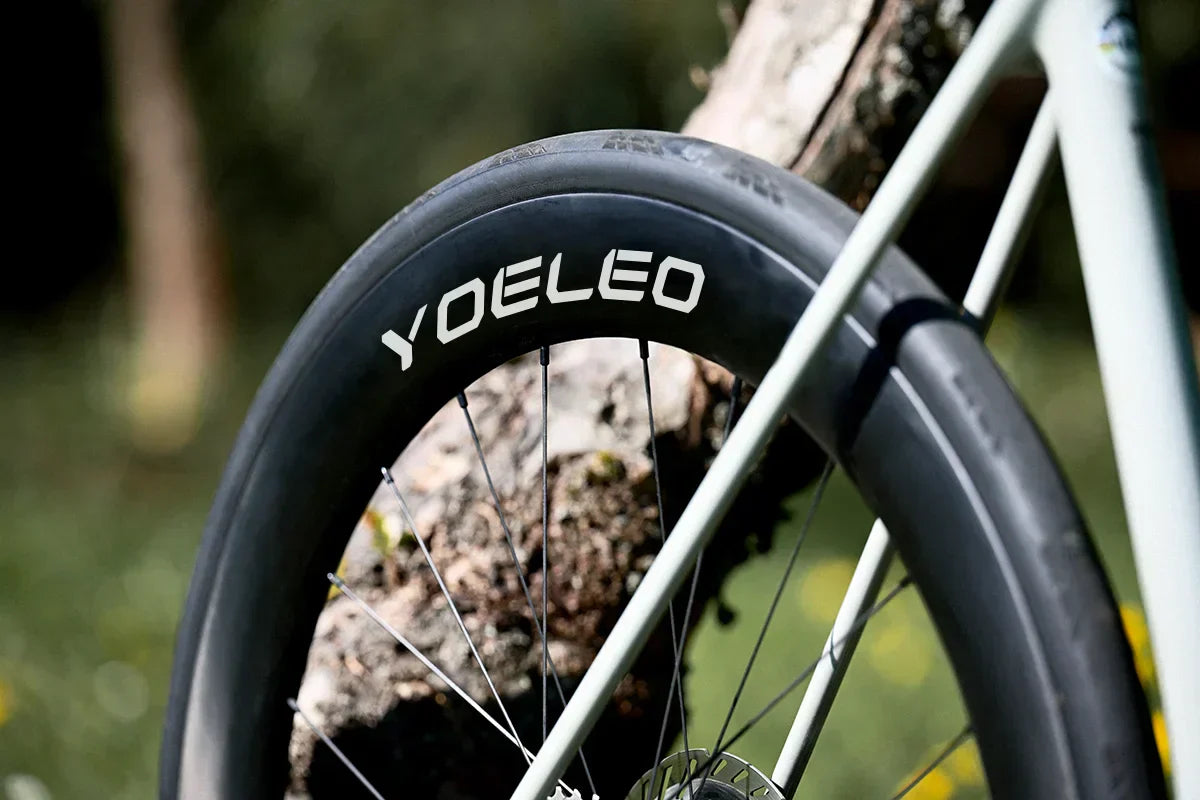
Yoeleo NxT SL2 with white bicycle frame close up

Cycling in Wind: How Wheel Depth Affects Your Ride — and What to Do About It

For most road cyclists, a 40–50 mm rim depth with a modern toroidal or U-shaped profile offers the best balance of aerodynamic savings and crosswind stability. You gain 80–90% of the aero benefit of deeper rims with manageable handling in winds up to 30 kph. Only ultra-light riders (under 60 kg) or those riding in consistently gusty conditions above 40 kph should consider dropping below 40 mm.

Read moreabout Cycling in Wind: How Wheel Depth Affects Your Ride — and What to Do About It
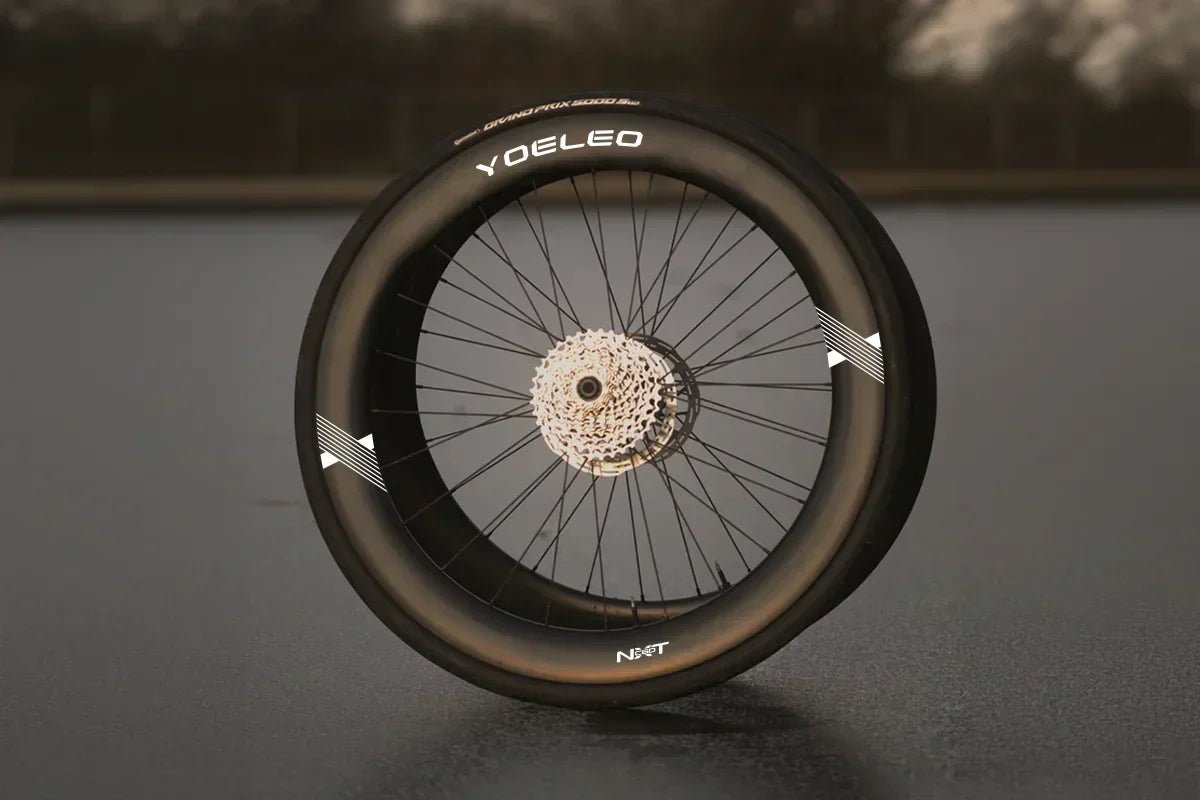
Yoeleo NxT SL2 SAT C60 unmounted

How to Set Up Tubeless Road Bike Wheels: Complete Guide (2026)
Tubeless road bike wheels eliminate the most frustrating part of cycling: mid-ride flats that leave you stranded with CO2 cartridges and shaking hands. After converting dozens of wheelsets in our workshop and logging over 15,000 km on tubeless setups across road, mixed-surface, and gravel terrain, we can confirm that tubeless is no longer a fringe experiment reserved for mountain bikers. It is the performance standard for serious road cyclists in 2026.

Read moreabout How to Set Up Tubeless Road Bike Wheels: Complete Guide (2026)

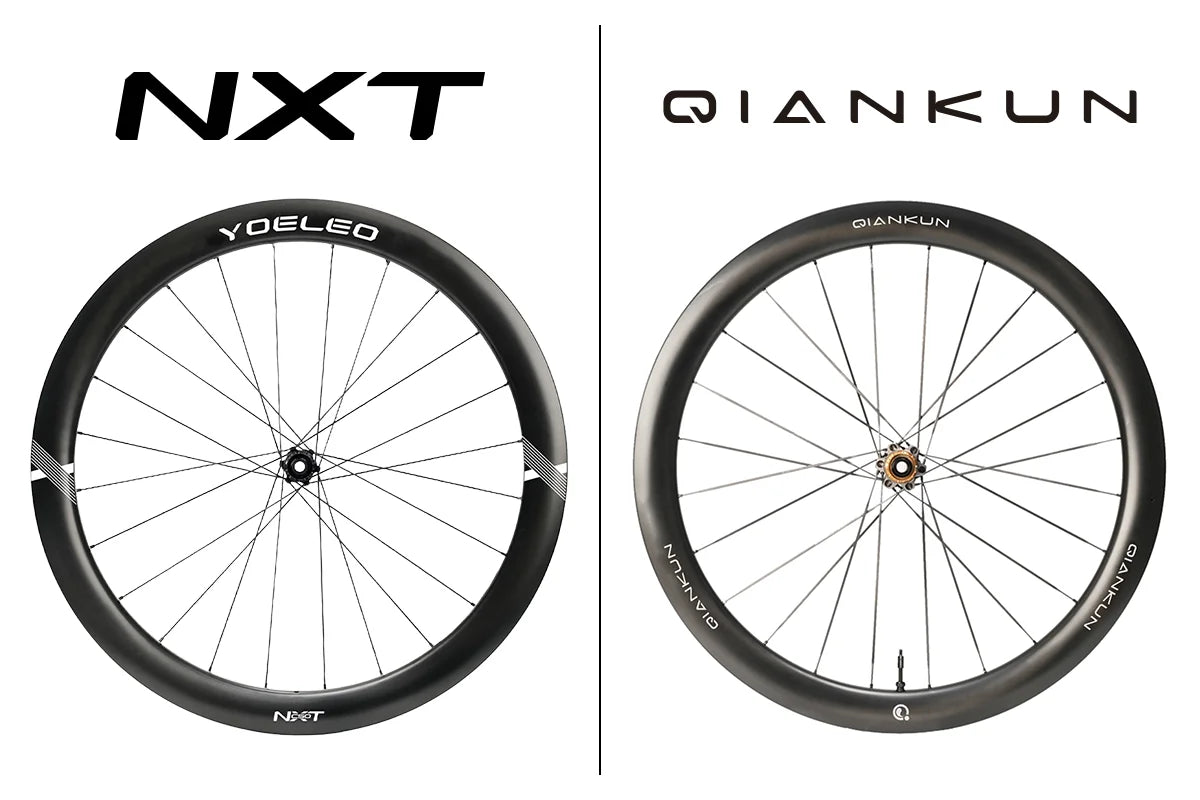
Stainless vs Carbon Spoke Wheelsets: NxT SL2 or QianKun CS — Which Should You Buy?

Stainless vs Carbon Spoke Wheelsets: NxT SL2 or QianKun CS — Which Should You Buy?

Choose the NxT SL2 ($999) if you ride gran fondo events, mixed terrain, or more than 10,000 km/year — stainless spokes are repairable at any bike shop worldwide, and the ride quality is excellent for endurance and fast group riding.

Choose the QianKun CS50 ($1,650) if you race — ITTs, criteriums, breakaways — and need every marginal gain. Carbon spokes cut 145g of rotational weight versus the NxT, with stiffer, more immediate power transfer under sprint loads.

Both wheelsets carry the same Toray T1000 carbon rims, TÜV-equivalent rim impact testing at 120 joules (3× the UCI 40J standard), and a 3-year warranty. The difference is entirely in the spoke material and hub system.

Read moreabout Stainless vs Carbon Spoke Wheelsets: NxT SL2 or QianKun CS — Which Should You Buy?