
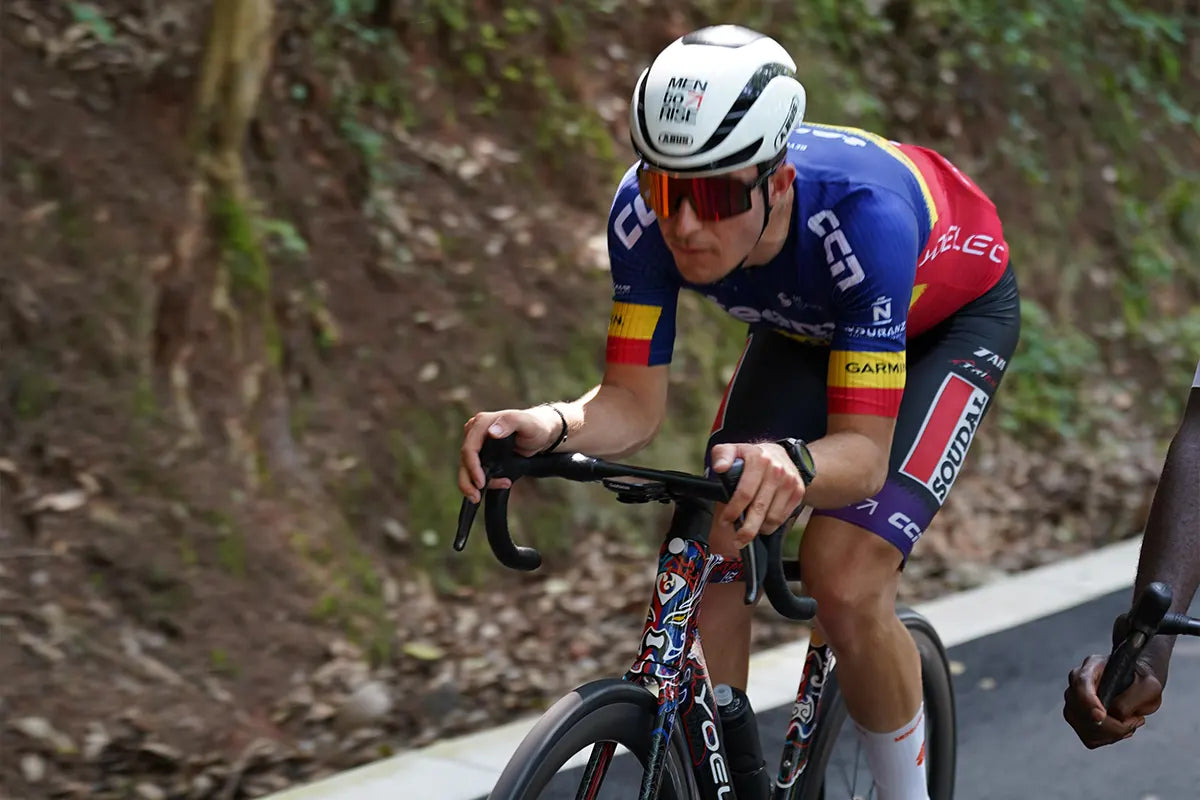
Most riders chase aerodynamics in the wrong order. They buy the deep wheels and the slippery frame first, then wonder why the gains felt smaller than the price tag suggested. The watts were real — they were just spent near the bottom of the hierarchy while the top sat untouched.

Cycling aerodynamics follows a clear pecking order, and once you can see it, every aero dollar and every position tweak lands in the right place. This is the map: where drag actually comes from, and the order to attack it for maximum wind efficiency.
|
THE AERO HIERARCHY IN 30 SECONDS
• The rider is ~75–80% of total aerodynamic drag — position beats every part
• Clothing and helmet are the best-value bolt-on watts after position
• Wheels are where component aero begins — about 10–15 W at 40 km/h
• Frame and cockpit integration refine the bike's 20% — real, but buy last
|
What Matters Most in Cycling Aerodynamics?
The rider matters most. Your body creates roughly 75–80% of total aerodynamic drag at road speeds, so your position is the single biggest aero factor — far ahead of any wheel, frame, or component you can buy.

That one fact reorganises everything. At 40 km/h, aerodynamic drag accounts for around 80% of the total resistance you fight, according to figures widely reported by GCN and Cyclist — and the great majority of that drag is you, not the bike. So the hierarchy runs from the biggest, lowest-cost lever to the smallest, priciest one. Let's climb down it in order.
Level 1: Position — the Foundation of Free Speed
Your riding position is the largest aerodynamic lever because it reshapes the biggest object in the wind: your body. Lowering and narrowing your frontal area can save 20–30 watts or more at 40 km/h versus an upright posture, according to aero testing reported by Cyclist.
Nothing else comes close for the money, because the change is free. Getting lower in the drops, narrowing your elbows, and bringing your hands inboard all shrink the area pushing air aside. A professional bike fit refines this without costing you power or comfort. Before any component enters the conversation, a rider who can hold an efficient, repeatable aero position has already won the biggest prize on the board.
Level 2: Clothing and Helmet — the Best-Value Watts That Bolt On
After position, what you wear is the highest-value aero upgrade. A close-fitting jersey or skinsuit can save 10–30 watts over a loose, flapping one at 40 km/h, and an aero road helmet adds a few more — all for a fraction of the cost of carbon parts.
Fabric is aerodynamically active. A flapping jersey is a parachute of tiny drag sources; a tailored one is a smooth surface the air slides over. The numbers are large precisely because clothing sits on the rider — the 80% of drag that dominates everything. Aero socks, tucked-in layers, and a clean helmet shape are the rare upgrades where pennies buy real watts. Skipping this level to spend on wheels is paying premium prices for smaller gains.
Level 3: Wheels — Where Component Aero Begins
Wheels are the first hardware where aerodynamics meaningfully concentrates. A deep carbon aero wheelset can save roughly 10–15 watts at 40 km/h versus shallow box-section alloy wheels, measured across the typical real-world yaw angles of 0–15 degrees.
The leading edge of a deep rim smooths the turbulent air thrown off the spinning tyre, which is why rim depth pays off on flats and rolling roads. The trade-off is crosswind behaviour: deeper rims catch more side wind, so the fastest wheel on paper isn't always the fastest in a gusty crosswind. This is the level where matching the rim depth to your terrain and conditions matters as much as the depth number itself.

Level 4: Frame and Cockpit — the Integration Layer
The frame and cockpit are the final aero layer: meaningful, but the smallest slice of the rider-plus-bike system and the largest spend. A one-piece integrated cockpit recovers roughly 8–14 watts at race pace versus a traditional bar-and-stem, plus 2–4 watts from internal cable routing, according to BikeRadar.
A modern aero frameset shapes its tubes to shed air and, crucially, integrates the front end — frame, fork, cockpit, and hidden cabling — into one clean shape so the air sees no junctions to trip over. The gains are genuine, but they sit at the bottom of the hierarchy for a reason: they refine the 20% of drag that's the bike, after you've addressed the 80% that's the rider. Buy here last, not first.
The Hierarchy at a Glance
|
Level
|
Lever
|
Typical saving (40 km/h)
|
Relative cost
|
|
1
|
Rider position
|
20–30+ W
|
Free–low
|
|
2
|
Clothing + helmet
|
10–30 W
|
Low
|
|
3
|
Aero wheels
|
10–15 W
|
Medium
|
|
4
|
Frame + cockpit
|
10–18 W
|
High
|
Read it top to bottom and the strategy writes itself: master position, dress the part, then invest in wheels and integration. Spend in that order and every watt is the lowest-cost one still available.
Building the Bottom of the Hierarchy Right
The aero hierarchy is liberating because it puts the biggest gains in your hands, for free. Position and clothing come first, always. But once you've earned those, the hardware layers are where engineering turns into durable, repeatable speed — and that's worth buying well.
Yoeleo builds for the bottom two hardware levels. The NxT SL2 aero wheels run deep where it counts — the C50 (1,330 g), C60 (1,340 g), and C88 for time trials — smoothing airflow across real-world yaw, and they're impact-tested to 120J, three times the 40J industry standard. The H9 one-piece cockpit and the R12 aero frameset integrate the front end into a single shape, the same platform the MenToRise team races in European professional events.
|
HOW YOELEO BUILDS THE AERO LAYERS
• Impact-tested to 120J — three times the 40J industry standard
• Front end: H9 one-piece cockpit and R12 aero frameset integrated into one shape
• Proven by racing: R12 platform raced by MenToRise in European pro events
• Accessible premium through DTC efficiency — aero engineering you can actually buy
|
It's accessible premium through DTC efficiency: aero engineering that sits under the position and clothing gains that cost you nothing. Climb the hierarchy in order, and the watts add up.
Frequently Asked Questions
What is the biggest source of aerodynamic drag in cycling?
The rider. Your body produces roughly 75–80% of total aerodynamic drag at road speeds, which is why position is the single most important aero factor — more than wheels, frame, or any component you can buy.
Do aero wheels or an aero frame give bigger gains?
Wheels usually give the bigger, more accessible gain. Deep aero wheels save around 10–15 watts at 40 km/h versus shallow alloy, while a frame and cockpit add roughly 10–18 watts but cost far more. Both sit below position and clothing in the hierarchy.
How much can a better cycling position save?
A lower, narrower position can save 20–30 watts or more at 40 km/h compared with sitting upright, because it shrinks your frontal area — the largest single contributor to drag. It costs nothing but practice and, ideally, a professional fit.
Does clothing really affect cycling speed?
Yes, significantly. A close-fitting skinsuit can save 10–30 watts over a loose jersey at 40 km/h because fabric on the rider's body sits in the 80% of drag that dominates. It's one of the lowest-cost meaningful aero upgrades available.
Share:
Frame Compliance vs Stiffness: The Endurance Balance