The most common question from riders considering a DTC carbon frameset is not
initially about carbon layup or spoke tension or geometry numbers. It is a simpler question, asked quietly: what is it actually like to do this? To order a frame from a website, to choose your own components, to build something that does not come out of a box pre-assembled from a brand you recognize from a magazine?

The honest answer is that getting past that emotional hesitation requires a shift from passive buying to active researching. To answer 'what is it like,' you ultimately have to look at the numbers. These are three versions of how that journey goes. They are illustrative — representative of the patterns and decisions that repeat across the riders in this community — not individual testimonials. The specifics are composite. The decisions are real.
|
DTC CARBON EXPERIENCE IN 30 SECONDS
• The most common hesitation is 'what if something goes wrong' — and the most common finding is that it doesn't, or when it does, the brand's direct support channel resolves it faster than a retailer would.
• Riders who have built from a DTC frameset consistently report that the research process itself increases their confidence in the final setup.
• The saving over a comparable retail-brand build is real and significant — and most riders reinvest it into components, fit, or a second build.
• The bike you build yourself is the bike you understand. That tends to matter more than expected over years of ownership.
|
Journey 1: The Road Rider Chasing Grams
Picture a road cyclist — four years in, riding a mid-range complete bike from a well-known brand, and increasingly aware that the frame is the limiting factor in the build. Not because it is bad, but because upgrading the groupset, wheels, and bars on that frame means spending money on a platform with a ceiling. The geometry does not suit long climbs the way they want it to. The weight is more than it needs to be. They want something lighter and more purposeful — but a leading-brand upgrade with those specifications costs significantly more than they are prepared to spend.

The DTC frameset path comes up during research. The immediate reaction is caution: they have heard the debates about Chinese carbon quality, about warranty support, about whether you can trust test claims you cannot independently verify. So they do what thorough riders do — they research. They find engineering teardowns. They find an independent reviewer who purchased a comparable gravel frameset and assessed it against other options in its class. They find a wheelset dissection that goes deep into spoke tension, hub tolerances, and rim construction.
Six weeks of reading later, the hesitation is not gone — but it is grounded in specific, answerable questions rather than ambient anxiety. They order the frameset. They work with a local mechanic for the build. When the frame arrives, the cable routing is cleaner than expected. The fit is what the geometry chart said it would be. The first long climb on the new build tells them what they needed to know.
Journey 2: The All-Rounder Who Wanted Versatility Without the Retail Price
A second type of rider is not chasing minimum weight. They are chasing a bike that does more: longer roads, occasional gravel, comfortable enough for a full day. At a retail brand at this spec level, the pricing for a complete build is prohibitive. A frameset-only purchase, by contrast, lets them carry over components they already trust and invest the difference in a professional fit and a quality wheelset.
This rider's journey through a DTC frameset purchase is less about skepticism and more about logistics. How does the sizing work without a test ride? The answer, they discover, is that frame geometry is a precise language — and a brand that publishes full stack, reach, trail, and head tube angle data gives you more information to make a sizing decision than most shop floor test rides. They use the sizing guide, cross-reference against their current bike's fit data, and order with more confidence than they anticipated.
The build takes three weekends. Rather than buying everything fresh, this rider carefully migrates their trusted drivetrain, focusing their budget instead on selecting new contact points—the exact handlebar width and saddle profile that fit them best. The process of curating these specific interfaces is slower than unboxing a complete bike. It is also more deliberate. By the time the first ride happens, this rider knows every component on the bike and why it is there. That turns out to matter: when a cable adjustment is needed at month two, they make it themselves in fifteen minutes.
Journey 3: The Gravel Transition
A third journey involves a rider moving from road to gravel — not replacing a road bike, but adding a second platform for mixed-terrain riding and occasional bikepacking. The requirements are specific: 700c with clearance for wide tires, a geometry that is stable at loaded speed, full internal cable routing, and a seatpost that absorbs road buzz over long days. A custom paint option is a priority — this bike is going to be photographed on interesting terrain, and they want it to look the part.
For this rider, the DTC path is not primarily about price — it is about spec control. At the budget they have in mind, a retail complete gravel bike will have compromises in the groupset or wheel tier they cannot predict or negotiate. A frameset purchase means they control every decision. The tire clearance they need is either there or it is not. The dropout standard is either compatible with their planned drivetrain or it is not. These are answerable questions in a way that 'is this bike good for me' is not.
|
Rider Profile
|
Primary Hesitation
|
What Resolved It
|
Post-Build Finding
|
|
Weight-focused road rider
|
Can I trust the carbon quality claims?
|
Independent third-party engineering reviews and teardowns
|
Frame quality exceeded expectations; no issues after first season
|
|
Versatility-focused all-rounder
|
How do I size without a test ride?
|
Full published geometry data + fit cross-reference from current bike
|
Sizing was accurate; fit professional confirmed position
|
|
Road-to-gravel transition rider
|
Will spec choices add up correctly?
|
Frameset spec sheet answered exact compatibility questions
|
Full spec control; custom paint delivered within stated craft time
|
What These Journeys Have in Common
Three different riders, three different priorities, three different routes through the same decision. What they share is not naivety about the process. Each did significant research. Each had real questions that needed real answers. And each found that the DTC frameset path, approached deliberately, delivered what it claimed — not because the brand asked them to trust it, but because the engineering claims, the independent reviews, and the build experience itself held up.
The pattern that repeats across these journeys is that the research process is part of the value. Riders who understand their frameset at the level of geometry, material, and test standard arrive at the build with a clarity that shortcut purchases — complete bikes chosen in a shop in twenty minutes — rarely produce.
The Yoeleo DTC Path
Each of the frameset types described in these journeys maps to something in the Yoeleo lineup. The weight-focused road platform is the
R11 — T1000 carbon, tested to 100,000 pedaling fatigue cycles at 1,100 N, UCI-approved, available in a range of sizes with a published geometry chart. The versatile all-rounder road build points to the
R12, which shares the same testing standard in a geometry more suited to longer days and mixed-pace riding. The gravel transition platform is the
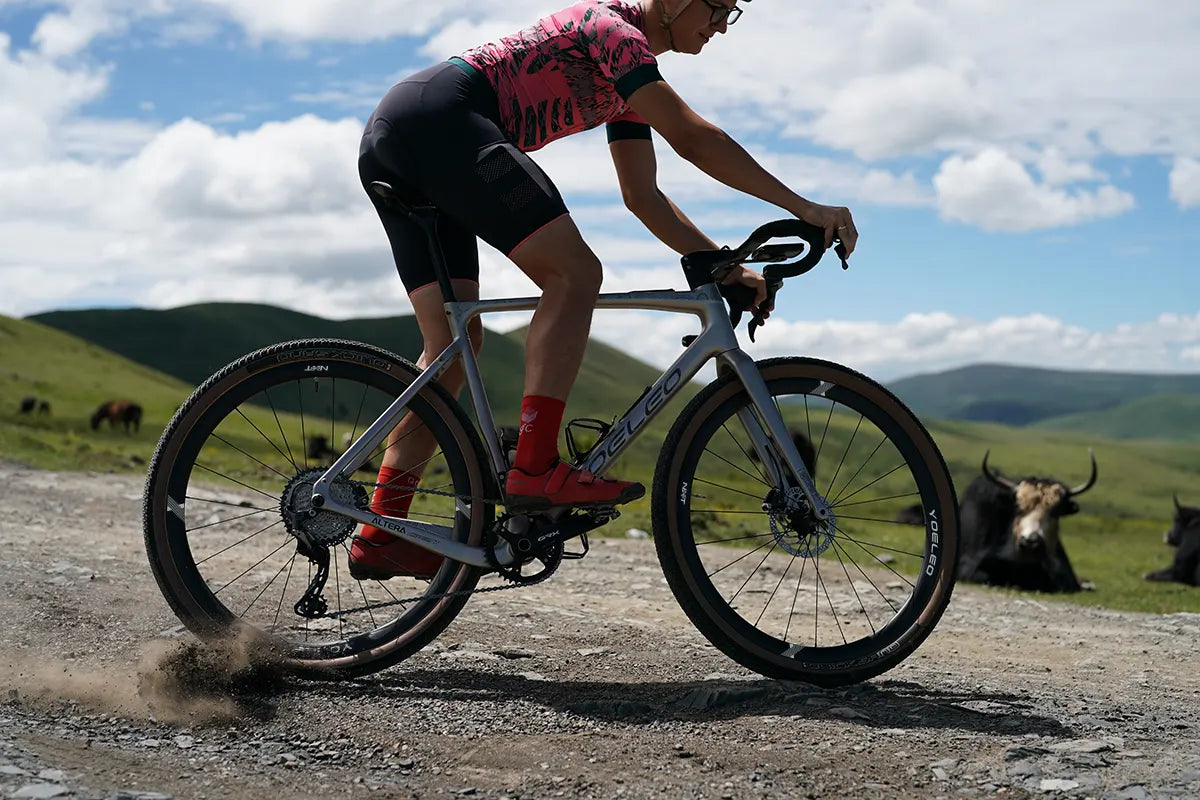
Altera G21 — 53 mm tire clearance, T-47 bottom bracket, Universal Derailleur Hanger, integrated in-frame storage, and a 27.2 mm Pro-Flex seatpost designed to reduce vibration fatigue on extended off-road days.

Custom paint is available across all three framesets. The craft time for a custom-painted frame is approximately 50 days — that is the time required to get it right, and we communicate the timeline transparently from the order confirmation forward.
|
HOW YOELEO MAKES THE DTC BUILD WORK
• Full geometry data published for every frameset — stack, reach, trail, head tube angle — so you can make a sizing decision from your current bike's fit numbers without a test ride.
• Internal testing to 100,000 pedaling fatigue cycles at 1,100 N across R11, R12, and G21 — an internal standard that exceeds ISO 4210 minimums, documented and published. • Independent validation from Hambini, Peak Torque, and Cyclist's Hub — engineers and riders who bought or tested the product without a brief from us.
• 6-year frameset warranty and direct-to-customer support — no retailer layer between your question and the engineering team.
• DTC efficiency translates to accessible premium pricing: you are paying for the frameset, not the retail margin on top of it.
|
Frequently Asked Questions
How do I size a DTC carbon frameset without a test ride?
Start with your current bike's fit data: saddle height, saddle-to-bar reach, and stack. Cross-reference these against the frameset's published geometry chart (stack and reach are the most transferable numbers). If you are between sizes, consider your riding style — more aggressive riders typically size down, comfort-focused riders size up. A professional fit session before or after ordering helps confirm the numbers.
What happens if there is a problem with a DTC frameset?
DTC brands with a direct support model typically resolve issues faster than retailer-mediated warranty claims, because there is no intermediary. A clear warranty policy, direct email or chat access to the brand, and transparent communication of expected resolution times are the key things to look for before purchasing.
Is building from a frameset significantly less expensive than buying a complete bike?
It depends on how you build it. If you are buying a bare frame and purchasing every single component brand-new at aftermarket retail prices, a complete bike from a major brand is often cheaper due to their bulk assembly discounts.
Where the real savings happen is in customization and reuse. If you already own high-quality parts to carry over, a DTC frameset is incredibly cost-effective. Furthermore, complete retail bikes often ship with compromises—mediocre wheels, or handlebars and saddles that do not fit you. By starting with a DTC frameset, you avoid the 'hidden cost' of buying a complete bike only to immediately spend hundreds more replacing parts that do not fit. You pay only for the high-end spec you actually want, without the retail brand markup.
How long does a custom paint option take on a DTC frameset?
For a custom-painted frameset, allow approximately 50 days from order to shipment. This is the craft time required to produce the finish correctly — not a processing delay but a genuine production commitment. Standard colorway frames ship on a shorter timeline.

Share:
7 Bike Buying Myths That Cost Cyclists Real Money
Cycling Aero Position Tips: Free Rider Position Audit