

Pravilova’s UCI Gravel World Championship 2025 win was not decided in the last 10km. It was decided in the first three hours — the period where most gravel races are lost through bad pacing, insufficient fueling, or equipment choices that do not match the course. This post pulls the lessons from both podium rides at UCI Gravel Worlds 2025 and translates them into principles you can use at your next gravel race.
|
THE THREE RACE-WINNERS
• Fueling: 80–120g carbs per hour from hour 1, not hour 3
• Pacing: zone 2 for the first third, zone 3 for the middle, full output for the final
• Equipment: setup decisions made two weeks before the race, not the morning of
|
How much should you eat during a gravel race?
Gravel race nutrition is more aggressive than road race nutrition because the durations are longer and the intensity varies more. Target 80 to 120 grams of carbohydrate per hour from hour one — not starting at hour two or three, which is where many riders default and then struggle from hour four onward. Modern sports nutrition science (Thomas and Stellingwerff, 2022) supports this range; trained riders can process this much with minimal GI distress when using dual-source carbs (glucose + fructose).
Practical execution: two bottles of 60g carb mix (120g total per bottle over 90 minutes), one gel every 30 minutes, and a solid food every 90 minutes. This reaches the 100g/hour mark without requiring constant attention. The Altera G21’s top-tube storage holds six to eight gels plus a solid bar within reach.

What pacing strategy did the podium riders use?
Both Pravilova and Verkuijl paced their races in thirds. First third: patient, zone 2, sit in the selection. Middle third: zone 3, respond to moves but do not initiate. Final third: read the terrain, make the decisive move on a section that favors your strength. This is not the only way to win a gravel race, but it is the way most gravel races at this level are won.
The opposite strategy — going hard from the gun — works for shorter gravel races (under 3 hours) where anaerobic capacity matters more. For six-hour races, patience wins. Pravilova’s winning solo move came in the final 40km; Verkuijl’s sprint for third came from holding position all day.

What equipment decisions matter most?
The equipment choices that matter in a gravel race, in order of impact:
|
Decision
|
Impact
|
Podium Choice
|
|
Tire choice and pressure
|
Highest — 5-15 watts over 6 hours
|
42mm tubeless, 25–28 psi
|
|
Nutrition plan execution
|
Very high — can decide the last 2 hours
|
100g carbs/hour from hour 1
|
|
Hydration strategy
|
High — dehydration costs power late
|
Two bottles + top-up at aid
|
|
Drivetrain / gearing
|
Moderate — matters on sustained climbs
|
1x, 42T front, 10-46 rear
|
|
Frame and wheelset
|
Moderate — determined long before race day
|
Altera G21 + SAT C45 Gravel
|
|
Cockpit / bar width
|
Low-moderate — fatigue factor late
|
H21 flared, 420mm hoods
|
Notice what is not on this list: frame weight, groupset tier, wheel depth. These matter less than riders typically think. At race pace, a 100-gram frame weight difference is fully offset by any modest improvement in tire choice or pacing.
What does a race-day kit setup actually look like?
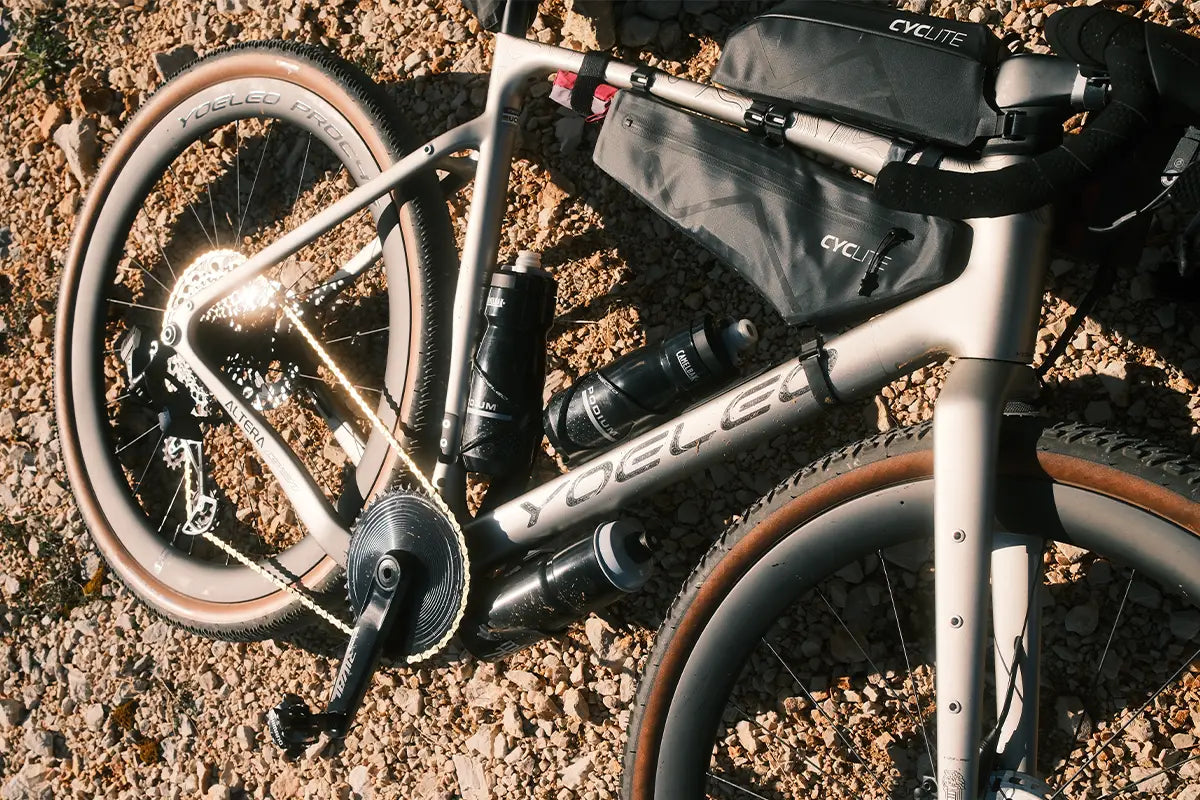
Based on the G21 podium setups at UCI Gravel Worlds 2025: two 600ml bottles on the frame (one water, one carb mix), top-tube bag with 6 gels and a bar, tool plug with tubeless repair kit and two spare CO2 cartridges in the down-tube storage, small hand pump on the frame, and one spare tube wedged in a saddle bag or jersey pocket as a backup.
Kit: long bib shorts (more padding for rough surfaces), jersey with three rear pockets plus a chest pocket, gloves with palm padding for vibration, and eyewear with clear or photochromic lenses (dust and debris management matter more than UV protection on gravel). Socks slightly longer than road socks — debris up the ankle is a real thing on gravel.

What do most gravel racers get wrong on race day?
Three patterns show up across the riders who do not make the selection. First, late fueling — starting nutrition at hour two instead of hour one. By the time the first surge comes, the body is already drawing down stored glycogen and the rider cannot respond. Second, over-cooking the first hour — burning matches that were needed later. Third, using new equipment or nutrition on race day. Race day is for what you already know works.
The fix for all three is the same: treat the week before the race as a setup week. Pressure-test tires and nutrition on a long training ride. Confirm your drivetrain shifts cleanly. Weigh the bike loaded to confirm it matches your plan. Race day execution is mostly decided by race-week preparation.
FAQ
How many carbohydrates per hour for a 6-hour gravel race?
Target 80 to 120 grams per hour, starting in hour one. Trained riders can absorb up to 120g/hour using dual-source carbohydrates (glucose + fructose). Cold weather may push the upper limit slightly higher; hot weather may reduce tolerance.
What should I eat the morning of a gravel race?
2 to 3 hours before start: 1.5 to 2 grams carb per kg body weight — rice, oatmeal, toast with honey. Low fiber and low fat to avoid GI distress. 30 minutes before start: small carb top-up (banana, gel, small rice cake). Familiar foods only.
Should I run a hydration pack for gravel racing?
Only above 30°C or for races longer than 6 hours where course aid stations are sparse. Two on-bike bottles plus aid station top-ups covers most gravel race scenarios. Hydration packs add weight and restrict body heat dissipation.
What is the biggest pacing mistake in gravel racing?
Starting too hard. The first 30 minutes of a gravel race typically have the fastest average power — and riders who match it without being ready pay for it in hour four or five. Sit 5 to 10% below your threshold power for the first hour of any race over three hours.
How much water should I drink per hour during a gravel race?
500 to 750ml per hour in moderate temperatures, up to 1L per hour in heat. Match fluid intake to sweat rate, which is rider-specific — a pre-race sweat test (weigh naked before and after a 1-hour effort) gives you your personal number.
Share:
How to Choose Your First Gravel Bike
7 Cycling Myths Keeping Beginners Slow | Yoeleo