
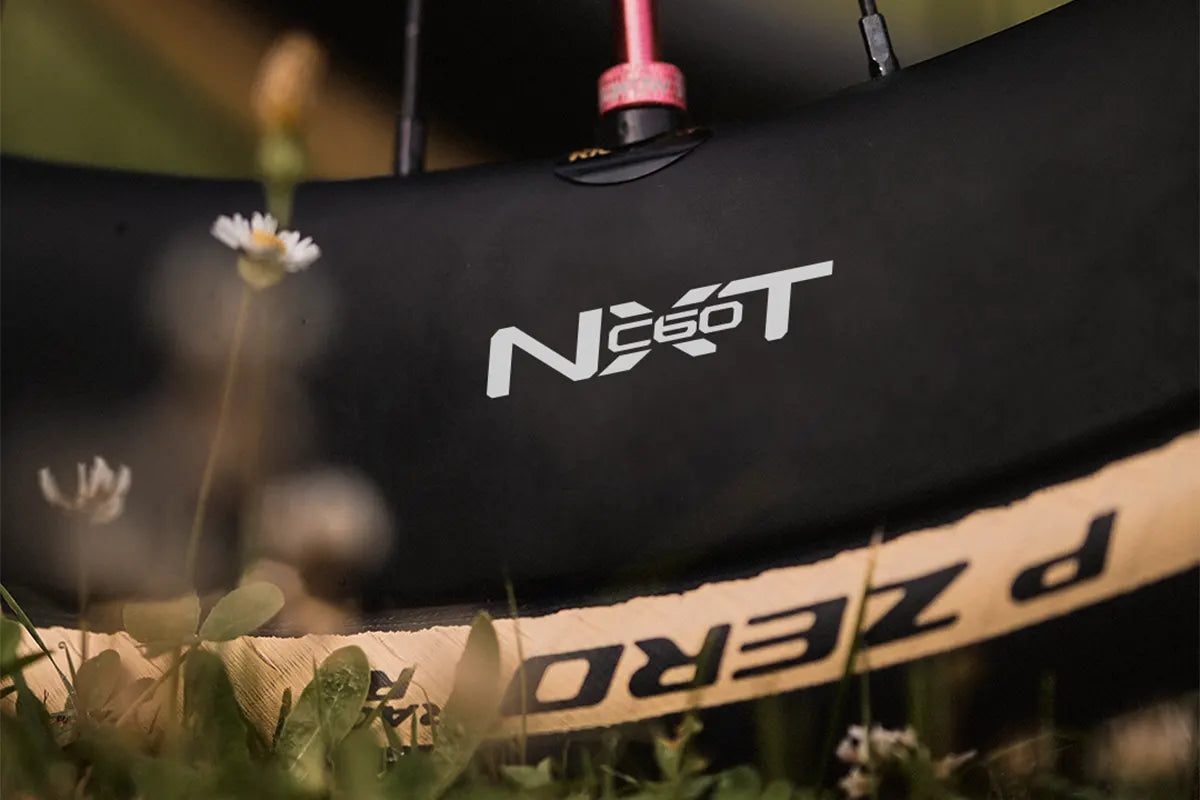
You ordered 28c tires. You mounted them on your wheels and measured 30.4mm across the tread. Neither the tire manufacturer nor the wheel manufacturer is lying to you — but the number on the sidewall assumes a specific rim width that your wheels may or may not match. If the rim is wider, your tire inflates wider. If it's narrower, it inflates narrower. This is not a footnote; it is the central variable in how your bike handles, feels, and rolls.

The shift to wider internal rim widths over the past decade has fundamentally changed how riders should think about tire selection. A setup optimised for a 19mm internal rim — the old standard — performs very differently at 21mm, 23mm, or 25mm internal. And because tires are measured on a reference rim that often does not match your actual wheels, the label is a starting point, not a guarantee.
|
INTERNAL RIM WIDTH IN 30 SECONDS
• A tire's stated size (e.g., 28c) is measured on an ETRTO reference rim that may be narrower than your actual wheels — your real inflated width will be different.
• For every 1mm increase in internal rim width above the reference, expect roughly 0.4–0.6mm increase in inflated tire width.
• Wider internal widths improve traction, comfort, and cornering feel — but can reduce aerodynamic benefit if the rim-to-tire width ratio is wrong.
• The current best-practice matching rule: internal rim width should be 70–85% of the inflated tire width for road riding.
|
What Is Internal Rim Width and Why Does It Matter?
Internal rim width is the measurement across the inside of the rim channel — the bed your tire bead sits in. It is distinct from external rim width, which is the widest point of the rim including the sidewalls. Internal width is the number that actually determines how your tire behaves.
A tire mounted on a narrow rim is pinched inward, which forces it to bulge outward in cross-section into an almost circular shape. The same tire on a wider rim spreads into a more square, rounded profile. That shape change affects three things directly: rolling resistance (the contact patch changes), cornering feel (a rounder profile rolls onto its edge faster), and aerodynamic efficiency (rim-to-tire transition geometry changes the airflow).
The ETRTO Reference Problem
Tire widths are standardised by the ETRTO (European Tyre and Rim Technical Organisation). A 28c tire is measured on an ETRTO reference rim with an internal width of 17mm — which was industry standard a decade ago and is now narrower than most modern road rims. If your wheels have a 21mm internal width, your 28c tire will inflate closer to 30–31mm. On a 25mm internal rim, it might reach 32mm.

This is not unique to one brand or one tire — it is a universal consequence of the measurement standard lagging behind rim design. The ETRTO has published updated guidance acknowledging the shift toward wider rims, but packaging has not caught up. Riders need to verify inflated width on their actual wheels, not trust the sidewall stamp alone.
How Width Affects Handling, Comfort, and Aerodynamics
-
Handling: A wider, more square tire profile rolls onto its sidewall more gradually in cornering — many riders describe this as increased confidence and feel.
-
Comfort: A wider inflated tire holds more air volume at the same pressure, which absorbs road texture more effectively than a narrower, higher-pressure equivalent.
-
Rolling resistance: Research from Wheel Energy and independent testing shows that wider tires at lower pressure can match or beat narrower tires at higher pressure for rolling resistance on real road surfaces — the contact patch is longer rather than narrower.
-
Aerodynamics: The aerodynamic picture is more complex. A wider tire can reduce drag if it matches a wide rim profile (the 105% rule — tire width should be equal to or slightly wider than external rim width). A tire that is narrower than the external rim creates a step that disturbs airflow and can increase aerodynamic drag.
The 105% Rule and Rim-Tire Matching
The practical matching rule that has emerged from aerodynamic research: the inflated tire width should be equal to or up to 5% wider than the external rim width. A 28mm external rim paired with a 28–30mm inflated tire sits in the optimal aerodynamic range. A 32mm inflated tire on that same 28mm rim creates an aerodynamic step that increases drag, particularly at higher speeds and yaw angles.
For internal width matching, the target is 70–85% of inflated tire width. A 28mm inflated tire performs optimally on an internal width of roughly 19–24mm. A 32mm inflated tire suits an internal width of 22–27mm. Below this range, the tire is pinched and cornering feel is compromised. Above it, the bead interface becomes less secure and some tire-rim combinations may not seat correctly.
Rim Width — Tire Size Matching Table
|
Internal Rim Width
|
Optimal Tire Range
|
Expected Inflated Width (28c)
|
Use Case
|
|
17mm (old standard)
|
23c–28c
|
27–28mm
|
Narrow aero / racing (legacy)
|
|
19mm
|
25c–30c
|
28–29.5mm
|
Versatile road / light endurance
|
|
21mm
|
28c–32c
|
29.5–31mm
|
Modern road standard
|
|
23mm
|
30c–35c
|
31–32.5mm
|
Endurance / gravel-road crossover
|
|
25mm+
|
32c–40c
|
33mm+
|
Gravel / all-road
|
What This Means When You Buy Tires or Wheels
If you are buying tires: check the internal width spec of your current wheels, then consult the tire manufacturer's width chart for your actual rim — not the reference rim. Many brands publish rim-width expansion tables, typically showing plus 0.4–0.6mm of inflated width per 1mm of internal rim width above the ETRTO reference.
If you are buying wheels: match internal width to the tire width you plan to run, not the tire width you ran on older, narrower wheels. Riders who move from 19mm to 21mm internal and continue running 25c tires often find the tire inflates closer to 27mm — which may push past their frame's tire clearance on some bikes. Always verify clearance with the actual inflated width, not the label.
Yoeleo NxT SL2 and QianKun: Designed for Modern Tire Matching
As internal rim standards have shifted, wheelset design has moved in step. The wheels riders buy today need to be engineered for the 28c–32c tires that are now the road default — not for the 23c and 25c tires that were standard when many rim width conventions were set.

Both the NxT SL2 and QianKun wheelset lines are built around contemporary internal widths matched to the 28c–32c range that most road and endurance riders run. The geometry accounts for the 105% aero rule — so the rim-to-tire profile is designed around the tire you'll actually mount, not a narrower legacy assumption.
|
HOW YOELEO MATCHES RIMS TO MODERN TIRES
• NxT SL2 rim profiles are engineered around 28c–32c tire matching — the widths road and endurance riders actually ride, not legacy 23c assumptions.
• QianKun wheelsets deliver the same contemporary internal width spec at an accessible premium price point, with individually replaceable carbon spokes for long-term serviceability.
• Both lines use a star ratchet freehub system — two interlocking toothed rings held under spring tension — for fast engagement without the maintenance demands of traditional designs.
• NxT SL2 is engineered to an internal 120J impact standard, three times the UCI minimum — so the rim handles real-road loads, not just lab conditions.
• DTC efficiency means the engineering goes into the wheel, not the marketing budget — accessible premium performance with the rim geometry your tires were designed for.
|
Frequently Asked Questions
How much wider will my 28c tire be on a 21mm internal rim vs a 17mm rim?
Using the 0.4–0.6mm expansion per 1mm of additional internal width as a guide, a 28c tire on a 21mm internal rim will inflate approximately 1.5–2.5mm wider than on a 17mm reference rim — roughly 29.5–30.5mm measured. Actual results vary by tire brand and construction.
Is wider always better for internal rim width?
Not universally. Wider internal widths improve comfort and traction with the right tire sizes, but if your frame has limited tire clearance, a wider rim and wider inflated tire may cause rubbing under load. Always check frame clearance with the actual inflated width on your wheel.
What is the 105% aero rule for rim and tire matching?
The 105% rule states that the inflated tire width should be equal to or up to 5% wider than the external rim width. This creates a smooth aerodynamic transition where air flows from rim to tire without a step or ledge that increases drag. A tire narrower than the external rim creates a wake-inducing edge.
Do I need to remount my tires after buying wider rims?
Not necessarily, but you should re-check the inflated width of your current tires on the new rims before riding. A tire that was 28mm inflated on a 19mm rim may measure 30–31mm on a 21mm rim. Verify you still have adequate frame clearance — typically you want at least 3–4mm of clearance on each side when loaded.
Share:
Your First Carbon Wheelset: How to Pick the Right Depth
How to Read Wheel Reviews Without Getting Fooled