
How to Wash a Carbon Bike Without Wrecking It
Rinse a carbon bike the wrong way and you won't see the damage that day. You'll see it eight months later, when a headset bearing turns gritty, a disc rotor squeals no matter how many times you clean the pads, or the clearcoat around a decal starts lifting at the edge. Carbon fibre doesn't corrode, but almost everything bolted to it does, and a hose aimed at the wrong spot is how water gets where it shouldn't.
The mistakes are nearly always the same ones, repeated weekly for a season until they add up: a jet washer held too close to the headset or bottom bracket shell, degreaser sprayed straight onto rotors, soap left to dry under a light coat of road film, or chain lube overspray nobody wiped off before it picked up grit. None of that wrecks a bike in one wash. It's the habit that costs you a headset, a bottom bracket, or a set of hub bearings.
Here's the sequence that avoids the habit: what water pressure is actually safe, which products belong on which surface, and the order to work in so you don't recontaminate a part you just cleaned.
How do you wash a carbon bike without damaging it?
Work top to bottom with low-pressure water, hand contact and a pH-neutral wash, and keep any hose or jet washer at least 30 cm (12 in) away from bearing seals, the bottom bracket shell, and any internal cable entry points.
That distance rule matters more than the soap you choose. Sealed bearings are rated to resist splash and light rain, not a concentrated jet at close range. A domestic pressure washer can put out 100+ PSI (7 bar) at the nozzle tip; a garden hose without a spray attachment sits closer to 40-50 PSI (3 bar) and is a safer default for the whole bike. If you only own a pressure washer, use the widest fan nozzle available and work from at least an arm's length away, never the pinpoint jet setting.
Frame tubes and fork legs tolerate more than people assume. It's the joints, seals and open ports, headset, bottom bracket, hub end caps, internal routing holes, that need the wider gap. Water that gets past a seal doesn't drain back out; it sits, and it works on grease and metal from the inside for months.
Water pressure and product zones
The bike splits into four zones, and each one takes a different level of force and a different product. Mixing them up is the single most common cause of avoidable component wear.
|
Zone
|
Safe water pressure
|
Use
|
Avoid
|
|
Frame tubes, fork legs, seatstays
|
Garden hose, under 40 PSI (2.8 bar)
|
pH-neutral bike wash, soft brush
|
Pressure washer at close range, citrus degreaser near decals
|
|
Drivetrain (chain, cassette, jockey wheels)
|
Hose or low-pressure washer, under 60 PSI (4 bar), sprayed from the side
|
Citrus or bio-degreaser, stiff nylon brush
|
Aiming spray toward rotors or the rim's brake track
|
|
Disc rotors and caliper
|
No direct spray
|
Isopropyl alcohol on a clean rag
|
Any degreaser, chain lube overspray, wax, polish
|
|
Bearings: headset, bottom bracket, hub seals
|
No direct jet, ever
|
Damp rag wipe at the seal line only
|
Any pressure washer
within 30 cm (12 in)
|

Isopropyl alcohol is the one product that's genuinely safe on rotors, because it evaporates fully and leaves no film. Everything else you own, degreaser, chain lube, even most bike-specific rotor sprays with added lubricants, can leave a residue that turns into brake squeal or reduced stopping power under load.
Choosing soap and degreaser
A pH-neutral bike wash is the right call for the frame and cockpit. Household dish soap won't dissolve carbon or eat through a clearcoat in one wash, but it's formulated to strip oils fast, and repeated use dries out rubber seals, grips and cable housing faster than a product built for a bike. If dish soap is what's in the cupboard, it's fine occasionally; it's not a long-term substitute for a dedicated wash.
Degreasers fall into two camps: solvent-based and citrus or bio-based. Solvent degreasers cut grease fastest but can soften some paints and decals on contact, so they're a drivetrain-only product, applied with a brush, never sprayed at the frame. Citrus and bio-degreasers are milder and safer near painted or decaled surfaces, though "safer" still means keep them off the rotors and away from bearing seals.
Skip anything abrasive, cutting compounds, scouring pads, stiff wire brushes, on the frame itself. Carbon's clearcoat is thin, and scratches in it are how UV starts to affect the resin underneath over years of sun exposure.
Washing sequence: top to bottom
-
Pre-rinse the whole bike at low pressure to knock off loose dirt before it gets ground in by a brush.
-
Drivetrain first, while it's still wet: brush degreaser into the chain, cassette and jockey wheels, working from the side so overspray doesn't reach the rotors.
-
Frame and cockpit next, with pH-neutral wash and a soft brush or sponge, rinsing as you go so soap doesn't dry on in the sun.
-
Wheels last, rim or disc surface wiped separately from the rest of the wash so degreaser never touches a braking surface.
-
Final rinse, low pressure, working from the top of the frame down.
Doing the drivetrain first, not last, is the detail most people get backwards. Wash the frame first and you're rinsing a degreased, gritty chain over a clean, wet frame right afterward.
Disc rotors and disc-only carbon rims
Disc-only carbon rims, the kind used on current road wheelsets like the NxT SL2 line, have no brake track to protect, which removes one contamination risk. It doesn't remove the rotor risk. A rotor that's picked up any oil, chain lube, hand cream, even finger oil from handling it, needs an isopropyl alcohol wipe before the next ride, not a rinse.

If a rotor is already contaminated and squealing, washing the pads won't fix it. The pads have usually absorbed the same contamination and need replacing alongside the rotor clean-up, or the squeal returns within a few rides.
Internal routing and drying
Frames with internal cable routing, such as an R12 frameset's internally routed cockpit, have entry and exit ports at the head tube and bottom bracket shell that are sealed by grommets, not welds. Grommets age, shrink slightly, and stop being watertight well before anyone notices. Treat every routing port like a bearing seal: no direct spray, wipe only.

After washing, dry the bike with a clean towel rather than letting it air-dry in the sun. Pay particular attention to the bottom bracket shell, headset cups and any bolt heads, standing water in a bolt recess is a slow route to a seized bolt at the next service. A short chain lube pass once everything is dry finishes the job; lubing a wet chain just traps water under the lube.
Worked example: post-gravel-ride wash on a disc-brake carbon bike
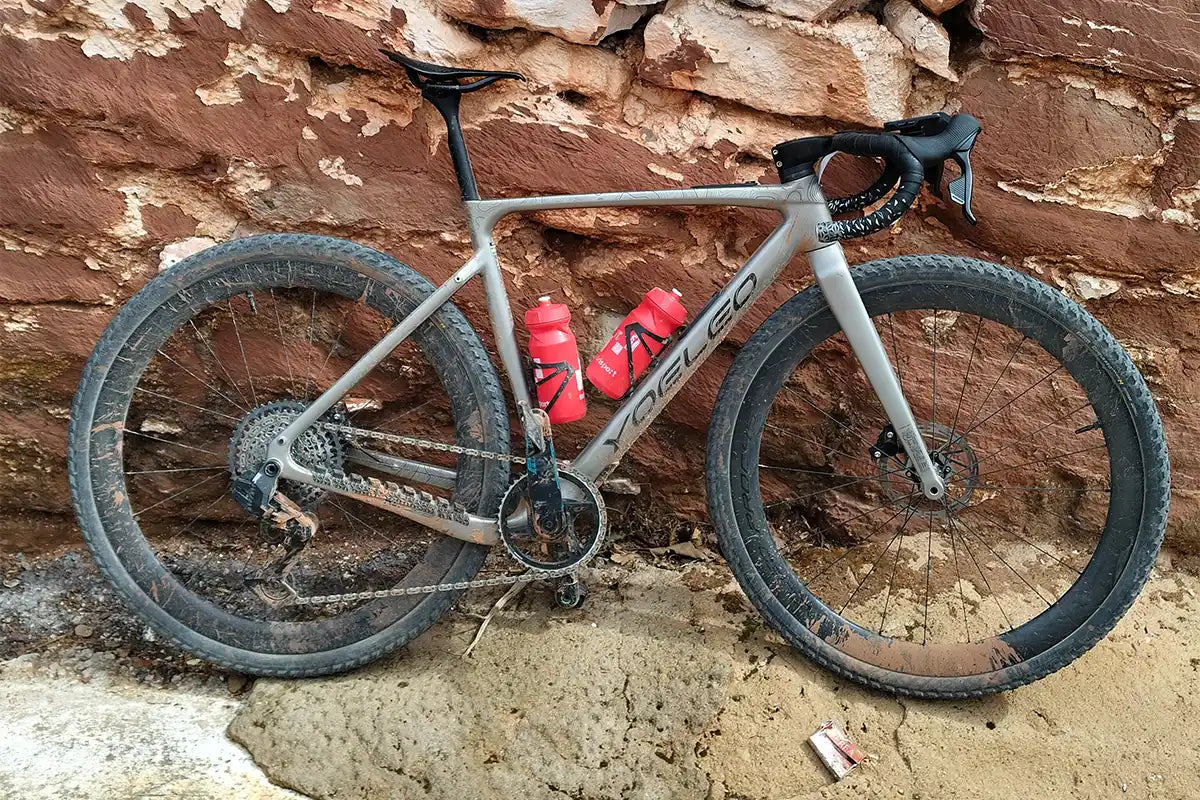
A rider gets back from a 60 km gravel loop with a fine layer of dust baked onto the frame, a muddy cassette, and light lube overspray near one rotor from a trailside chain check.
Pre-rinse: 2 minutes, garden hose, no attachment, working top to bottom.
Drivetrain: 3 minutes, citrus degreaser brushed into the chain and cassette, sprayed from the side, kept 20 cm clear of the rotor.
Frame wash: 5 minutes, pH-neutral soap, soft brush on the fork legs and down tube where dust has caked on, rinsed immediately rather than left to sit.
Rotor: wiped separately with isopropyl alcohol on a fresh rag, both sides, before it goes back near the caliper.
Dry: 4 minutes with a towel, bottom bracket shell and headset given extra attention.
Chain lube: applied once the chain is fully dry, one drop per link, wiped back after a minute.
Total time: under 20 minutes, and every step keeps water and degreaser away from a seal or a braking surface.
Frequently Asked Questions
Can I use a pressure washer on a carbon bike?
Yes, but only with a wide fan nozzle held at least 30 cm (12 in) from bearing seals, the bottom bracket shell and cable ports. Pinpoint jets at close range push water past seals that are rated for splash, not direct pressure, and the damage shows up months later as gritty bearings.
Will dish soap damage a carbon frame?
An occasional wash with dish soap won't damage carbon or the clearcoat. Used repeatedly, it dries out rubber seals, bar grips and cable housing faster than a pH-neutral bike wash, because it's formulated to strip oils aggressively. Keep it as a backup, not the default.
How do I clean disc rotors without contaminating them?
Wipe them with isopropyl alcohol on a clean rag rather than spraying anything at them. Degreaser, chain lube overspray and even wax residue transfer to the pads and cause squealing or reduced stopping power that a normal wash won't fix.
How often should I wash a carbon bike?
After every wet or muddy ride, and at least every two to three dry rides if you're riding regularly. Dust and sweat salt both attack bolts and bearing seals over time even without visible dirt on the frame.
Share:
Marginal Gains Cycling: What's Worth It and What Isn't
The 5-Minute Pre-Ride Check for a Self-Built Carbon Bike