
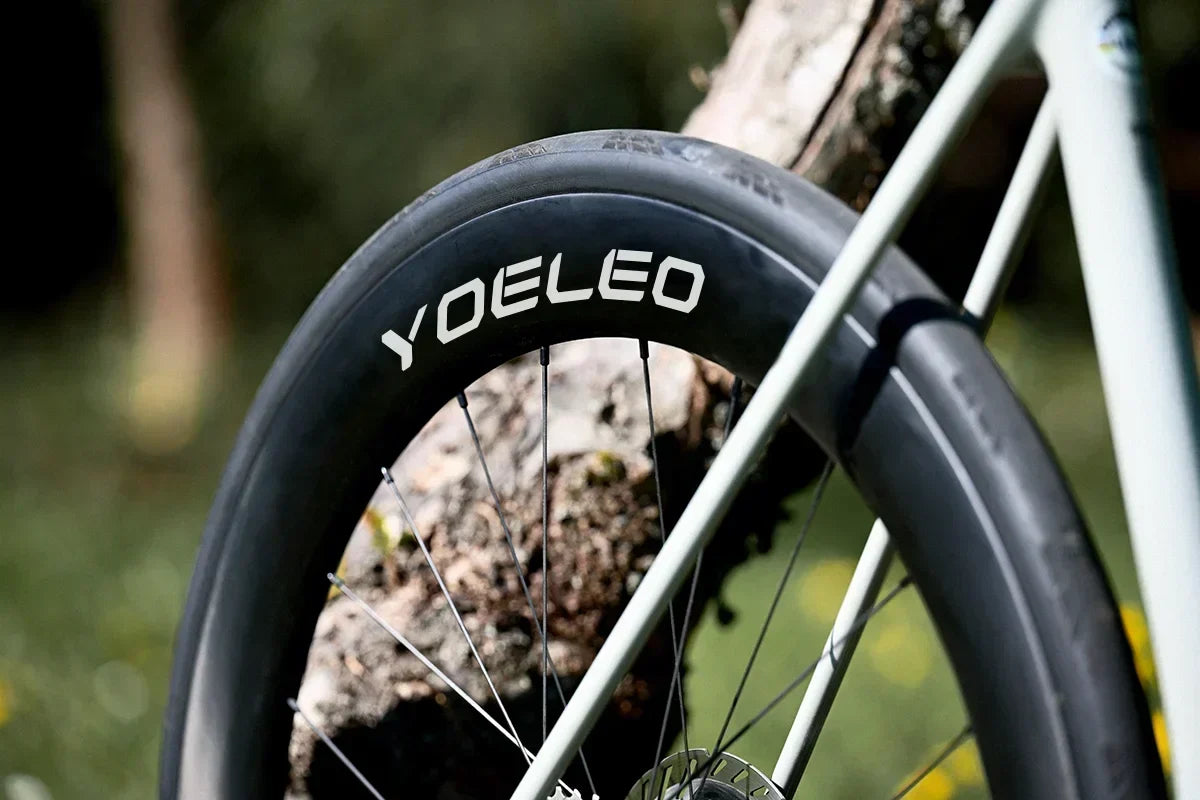
Reading Tyre Wear: When to Replace, Rotate, or Bin It
You glance down at your rear tyre before a ride and can't quite tell if it's fine or on its way out. The centre tread looks a bit flatter than it used to, there might be a fine line of casing showing through, but it's not obviously bald and it's not obviously fresh either. Most riders either replace tyres too early, out of caution, or too late, after a puncture makes the decision for them.
Tyre wear isn't one thing. A tyre can fail from tread wear, from sidewall cracking that has nothing to do with mileage, or from a flat spot that happened in a single hard braking event. Each of these looks different and means something different for whether you replace, rotate, or keep riding.
This is a practical scale you can run through in under a minute, in a car park or your garage, without any tools beyond your own eyes and a fingernail.
The Five Signs That Actually Mean Replace It
A tyre needs replacing, not just watching, when any of these show up: casing threads visible through the rubber, a square or flattened cross-section that's lost its round profile, sidewall cracking that goes beyond surface hairlines, repeated punctures clustering in the same zone of the tread, or a visible bulge anywhere in the casing.
Casing threads showing through is the clearest signal. Once the rubber compound has worn down to the woven casing underneath, usually visible as a faint fabric texture or a colour change from black to grey, the tyre has no meaningful puncture protection left in that spot. This isn't a "ride it a bit longer" situation.
A bulge is the only one on this list that means stop riding immediately rather than replace it on your own schedule. A bulge indicates the casing itself has partially failed and could blow out under pressure or load.
Reading Tread Wear Indicators
Some road tyres mould in small wear indicator dimples, shallow pits in the centre tread that disappear once the tyre has worn down to the point of needing replacement. If your tyre has these, check for them directly rather than guessing from the tread pattern.

Tyres without moulded indicators need a visual and tactile check instead. Run a fingernail across the centre tread. New tyres have a slight rounded profile with visible directional grooves. A worn tyre feels smoother and the profile across the top starts to flatten, which you can usually see by comparing the tyre's cross-section to a fresh one, front to rear, since the rear wears faster.
Front vs Rear Wear Rates and Rotation
The rear tyre carries more weight and takes more braking and drivetrain load, so it wears faster than the front, commonly in a 60:40 or 55:45 split depending on riding style and terrain. This makes front-to-rear rotation worth doing once, partway through a tyre's life, if your tyres aren't directional and the tread isn't asymmetric.
Rotation doesn't work for every tyre. Directional tread patterns, marked with an arrow on the sidewall, are designed to roll one way only, and rotating a directional tyre to the other side without reversing the wheel direction defeats the design. Check the sidewall markings before rotating anything.
How Rim Internal Width Changes What You See
The rim you're running the tyre on changes how that tyre wears and how it looks when it does. A wider internal rim width, such as the 23 mm internal width used on SAT and QianKun road wheelsets, stretches the tyre into a rounder, more supported profile than the same tyre on a narrower rim. That rounder profile spreads the contact patch more evenly across the tread, which tends to produce a flatter, more even wear pattern rather than a sharply worn centre stripe.
A tyre that's worn into an obvious centre ridge, with the shoulders still looking fresh, is a sign the rim-and-tyre combination is running a narrower effective profile than ideal, or that pressure has consistently been too high for the load. Either way, it's useful information for your next tyre choice or pressure setting, not just a wear observation.
Sidewall and UV/Ozone Cracking
Sidewall cracking is a different failure mode entirely, driven by age and UV/ozone exposure rather than mileage. A tyre stored in direct sunlight, or simply left in service for several years regardless of distance ridden, can develop fine cracks across the sidewall rubber even if the tread still looks nearly new.

Light surface cracking that doesn't reach the casing threads is cosmetic and not urgent. Cracking deep enough to expose or separate the casing fibres underneath is a replace-it situation, since the sidewall carries less reinforcement than the tread and a crack there progresses to a failure faster than tread wear does.
A Five-Stage Wear Scale You Can Use in 30 Seconds
Run through these five stages from a quick look and a fingernail check: full tread definition with sharp edges means keep riding, slightly rounded shoulders with tread still visible means keep riding but check again in a few hundred kilometres, a flattened centre profile with no casing visible means plan a replacement soon, any casing thread visible through the rubber means replace now, and any bulge or deep sidewall crack means stop riding and replace before the next ride.
|
Wear stage
|
Visual sign
|
Action
|
|
1. Fresh
|
Sharp tread edges, full profile
|
Keep riding
|
|
2. Moderate
|
Shoulders rounding, tread still visible
|
Keep riding, recheck in ~500 km
|
|
3. Worn
|
Flattened centre, no casing visible
|
Plan replacement soon
|
|
4. Critical
|
Casing threads visible through rubber
|
Replace now
|
|
5. Failure risk
|
Bulge or deep sidewall crack
|
Stop riding, replace before next ride
|
Worked example: 6,000 km on a 25 mm rear tyre, 23 mm internal rim
A rider has put 6,000 km on a 25 mm road tyre mounted on a 23 mm internal-width rim, mostly on dry tarmac with occasional wet rides.
At the check: the centre tread has flattened compared to the still-rounded shoulders, a faint grey thread texture is visible in a narrow band down the centre when stretched slightly between two fingers, and there's no bulge or sidewall cracking.
That combination sits at stage 3 moving into stage 4: casing is just starting to show. The rider's call is to replace within the next week or two of riding rather than immediately, but not to start a longer trip on it without a spare tube and a plan, since a stage-4 tyre punctures more easily under load. The front tyre, checked the same way, is still solidly at stage 2 and doesn't need attention yet.
Five-stage road bike tyre wear scale showing when to replace, rotate, or keep riding
Frequently Asked Questions
How many kilometres should a road bike tyre last?
It varies widely with tyre model, rider weight, road surface, and riding style, commonly somewhere between 3,000 and 8,000 km for a rear tyre. Distance alone is a poor predictor; the visual and tactile checks in this guide matter more than an odometer number.
Is it normal for my rear tyre to wear out much faster than my front?
Yes. The rear carries more weight and more braking and drivetrain load, so a 60:40 or 55:45 wear split between rear and front is typical. If your rear is wearing dramatically faster than that, check your tyre pressure and braking habits.
Can I keep riding on a tyre with visible casing threads?
Not recommended. Once casing threads show through, the rubber layer meant to resist punctures is gone in that spot, and puncture risk rises sharply. Replace it before your next ride rather than trying to stretch it further.
Does higher tyre pressure make tyres wear out faster?
It changes the wear pattern more than the overall speed. Overinflated tyres tend to wear a narrow centre stripe first, since less of the tread contacts the road, while correctly inflated tyres for your rim's internal width wear more evenly across the full profile.
Share:
Chain Wear: How to Measure It and Why It Saves Your Cassette
Roadside Tubeless Repair: What to Carry, In What Order