
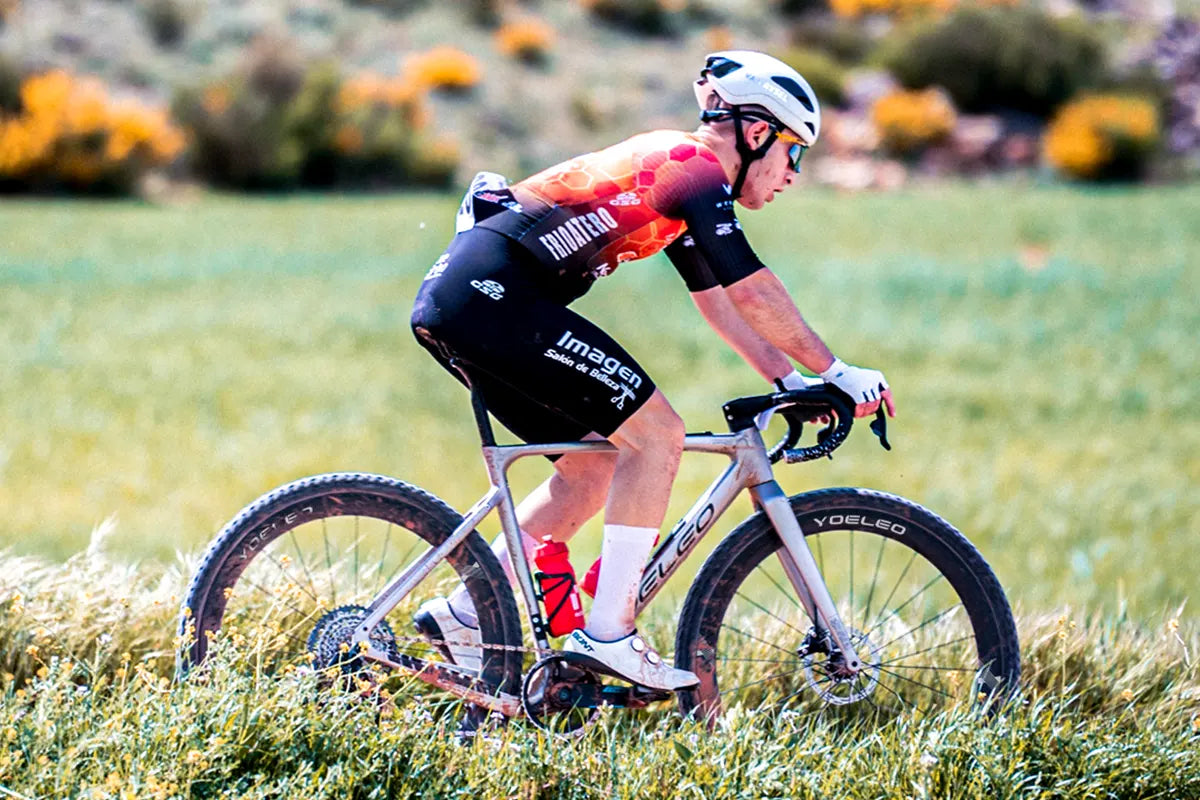
The marginal gains concept — the idea that aggregating small improvements across every variable produces a large compound result — has done something peculiar to cycling culture. It has made riders feel that every purchase is a performance decision, and that no detail is too small to optimize. Brake cable type. Skinsuit seam placement. The direction in which your bar tape overlaps. At some point, marginal gains became less a performance strategy and more a permission structure for spending.

The actual research on cycling performance is more clarifying and less convenient: a small number of variables account for the majority of free speed available to a recreational or competitive amateur cyclist. Most marginal gains products target the remainder — the edges of a pie that is already mostly cut. This guide ranks the real levers from the noise, without the reverence the category usually receives.
|
MARGINAL GAINS IN 30 SECONDS
• Rider position is the single largest aerodynamic variable available to most cyclists — and it costs nothing to improve.
• Tire choice and pressure have a larger effect on rolling resistance than almost any component upgrade.
• Wheels are the highest-return component upgrade for speed: rotating mass and aerodynamic drag both matter, and they compound.
• Most 'marginal gains' products operate on gains so small they are within the noise of day-to-day variation in rider output.
|
The Gains That Actually Move the Number
Before getting to the products, it is worth stating clearly: the largest performance variables available to most cyclists are not purchasable. They are behavioral. Training load, sleep, and nutrition account for differences in output that no component can compensate for. A rider who trains well and sleeps badly will underperform a rider with marginally worse kit and better recovery. This is not a preamble — it is the context in which all of the following must be read.
Gain 1: Rider Position (Free, Highest Return)
The rider accounts for approximately 70–80% of aerodynamic drag in a typical road cycling position. This is not a rough estimate — it is a well-replicated finding from wind tunnel and CFD research across recreational and competitive riders. The most effective aero intervention available to most cyclists is optimizing their position on the bike: lowering the torso, narrowing shoulder width, and reducing frontal area.
A professional bike fit that addresses riding position can produce aero improvements that no single component purchase can match. The fact that it costs less than most aero upgrades is the part the industry prefers not to emphasize.
Gain 2: Tires and Pressure (Low Cost, High Return)
Rolling resistance is the dominant energy cost at speeds below approximately 30–35 km/h, and a significant factor above it. Tire selection and inflation pressure are the highest-return adjustments most riders never optimize. Research from sources including Bicycle Rolling Resistance testing (which publishes repeatable measurements across tire models) shows that the difference between a high-rolling-resistance training tire and a top-tier racing tire at optimal pressure can exceed 5–15 W of savings per tire at 30 km/h—a cumulative system saving of up to 30 W that completely dwarfs most expensive component upgrades.
Pressure matters as much as tire selection. Most riders inflate to higher pressures than optimal for their weight and road surface, which increases vibration energy loss on real roads. Finding the optimal pressure for your weight, tire width, and typical road surface is one of the lowest-effort, highest-return adjustments available.
Gain 3: Wheels (Compound Return on Two Variables)
Wheels are the one component upgrade that operates on two physics variables simultaneously: aerodynamic drag and rotating mass. Rotating mass counts twice during acceleration—once as linear mass and once as rotational inertia—which is why removing even 200–300 grams from the outer rim of a wheelset is far more performance-relevant than removing the same weight from a bike frame. Hambini's independent aero testing of the NxT SL2 C60 found aerodynamic performance that competed directly with wheels from leading Western brands at significantly higher price points.

The relevant decision for most riders is not 'should I upgrade wheels' but 'what depth makes sense for my riding.' A 35–50mm rim depth offers the best all-round balance for varied terrain and crosswind conditions. Deeper than 60mm makes sense on flat courses or in conditions with low yaw angle variation, but increases crosswind sensitivity in a way that costs time and energy management on open roads.
The Bridge Gain: Chain Waxing
Chain wax sits right on the border of meaningful speed and marginal noise. Waxed chains have measurably lower friction than wet-lubed chains, saving 3–5 W in controlled conditions. While highly effective for racing, the intensive stripping and melting process means it is often a neutral trade-off for daily training. If you are willing to do the maintenance, it is the lowest-cost "free speed" left on the table; if not, stick to a clean wet lube.
The 5 Gains That Probably Don't
-
Ceramic bearings: The academic case is solid — ceramic bearings have measurably lower friction than steel under ideal conditions. The real-world return under road contaminants, load variation, and temperature change is considerably smaller. Independent testing consistently puts the gain at 1–3 W for a full drivetrain replacement. Not zero, but not worth the premium for most riders.
-
Aero helmets: An aero helmet in a non-aero position is a marginal gain on top of a large loss. Riders who have not optimized their position will extract more speed from a fit session than from an aero helmet upgrade.
-
Lighter water bottles: At the level of precision required for mass savings in bottles to matter, you have already addressed every other variable. This one appears on marginal gains lists because it is photogenic, not because it moves results.
-
Electronic groupset vs mechanical: The performance difference between a well-maintained mechanical groupset and electronic on a recreational or sportive rider is functionally zero. Electronic offers convenience, precise adjustment, and marginally faster shifts. It does not make you faster.
|
Variable
|
Estimated Gain
|
Cost Level
|
Priority
|
|
Rider position optimization
|
20–40 W equivalent at 40 km/h
|
Low (fit session)
|
1 — Do this first
|
|
Tire selection + pressure
|
5–15 W per tire at 30 km/h
|
Low–Medium
|
2 — Highest component ROI
|
|
Wheelset upgrade (depth + weight)
|
5–15 W aero + rotating mass benefit
|
Medium–High
|
3 — Best single component investment
|
|
Skinsuit (vs kit)
|
10–15 W at racing speeds
|
Medium
|
4 — Meaningful at race pace
|
|
Chain wax
|
3–5 W (controlled conditions)
|
Low
|
5 — High maintenance, but cheap friction reduction
|
|
Ceramic bearings
|
1–3 W (full drivetrain)
|
High
|
Low ROI — Noise floor of day-to-day variation
|
|
Aero helmet alone
|
3–8 W (varies with position)
|
Medium–High
|
Low ROI — Optimize position first
|
|
Electronic groupset
|
~0 W performance
|
Very High
|
Convenience upgrade, not a speed upgrade
|
|
Weight savings in bottles
|
<0.5 W equivalent
|
Low
|
Irrelevant — Below meaningful threshold
|
Where Wheels and Cockpit Fit In
For riders who have addressed position and tires, wheelset and cockpit upgrades are the highest-return next step. Yoeleo's NxT SL2 wheelsets are engineered for exactly the performance profile that matters in this context: aerodynamic efficiency at real-world yaw angles (tested by Hambini), rotating mass optimization (the C50 at 1,330 g is competitive with wheels at significantly higher price points), and a star ratchet hub system that delivers responsive engagement without the maintenance complexity of a pawl system.
The QianKun CS50 and CS60 offer the same premium wheelset experience in a tier accessible to riders who want to make the wheel upgrade their primary investment. Both use individually replaceable carbon spokes — a serviceability advantage that matters over the lifespan of a wheelset — and are engineered to the same internal 120J impact standard, three times the UCI minimum.

Cockpit integration via H9, H21, or H25 handlebars addresses the position variable at the infrastructure level — it moves bar, stem, and cable routing into a single unit that reduces frontal area and cable drag simultaneously. The correct sequence is: get fitted, then integrate the cockpit around that fit.
|
HOW YOELEO TARGETS THE GAINS THAT MATTER
• NxT SL2 wheelsets: engineered to an internal 120J impact standard (3× the UCI minimum); 100,000 pedaling fatigue cycles at 1,100 N; star ratchet freehub for consistent engagement.
• Hambini's independent aero assessment of the NxT SL2 C60: aerodynamic performance competitive with wheels from leading Western brands at higher price points.
• QianKun CS50/CS60: individually replaceable carbon spokes; same 120J internal standard; premium DTC tier for riders prioritizing the wheel upgrade above all.
• H9/ H21/ H25 integrated cockpits: T700 ProMoldCore one-piece construction; designed to support optimized position with clean cable routing and reduced frontal area.
• DTC efficiency means the gains that matter most — wheels and cockpit — are accessible at a price point that leaves budget for the fit session that makes them work.
|
Frequently Asked Questions
What is the single best marginal gain for a recreational road cyclist?
Rider position optimization — specifically lowering and narrowing your frontal area. The rider accounts for 70–80% of aerodynamic drag, so even modest position improvements produce gains that exceed most component purchases. A professional bike fit is the highest-return single investment most recreational cyclists can make.
Are ceramic bearings worth the upgrade?
For racing, possibly — the gain is roughly 1–3 W across a full drivetrain in controlled conditions, which is real but small. For training and recreational riding, the gain is within the noise of day-to-day variation in rider output and road conditions. The premium over quality steel bearings is hard to justify on a pure performance-per-pound basis for most riders.
What rim depth is best for all-around road cycling?
A 40–50mm rim depth offers the best balance of aerodynamic efficiency, crosswind stability, and weight for most road cyclists riding at 30–40 km/h on varied terrain. Deeper rims (60mm+) add aero benefit on flat courses and in low yaw-angle conditions, but require more active management in crosswinds. See our C35 vs C50 comparison guide for a detailed breakdown.
Does an electronic groupset make you faster?
Not meaningfully. The performance difference between a well-maintained mechanical groupset and electronic is functionally zero for recreational and competitive amateur riders. Electronic groupsets offer precision adjustment, cleaner shifting feel, and convenience features — but they do not change the watts you produce or the drag you generate. If speed is the goal, wheels and position upgrades return more performance per pound spent.
Share:
Cycling Aero Position Tips: Free Rider Position Audit
How to Wash a Carbon Bike Without Wrecking It